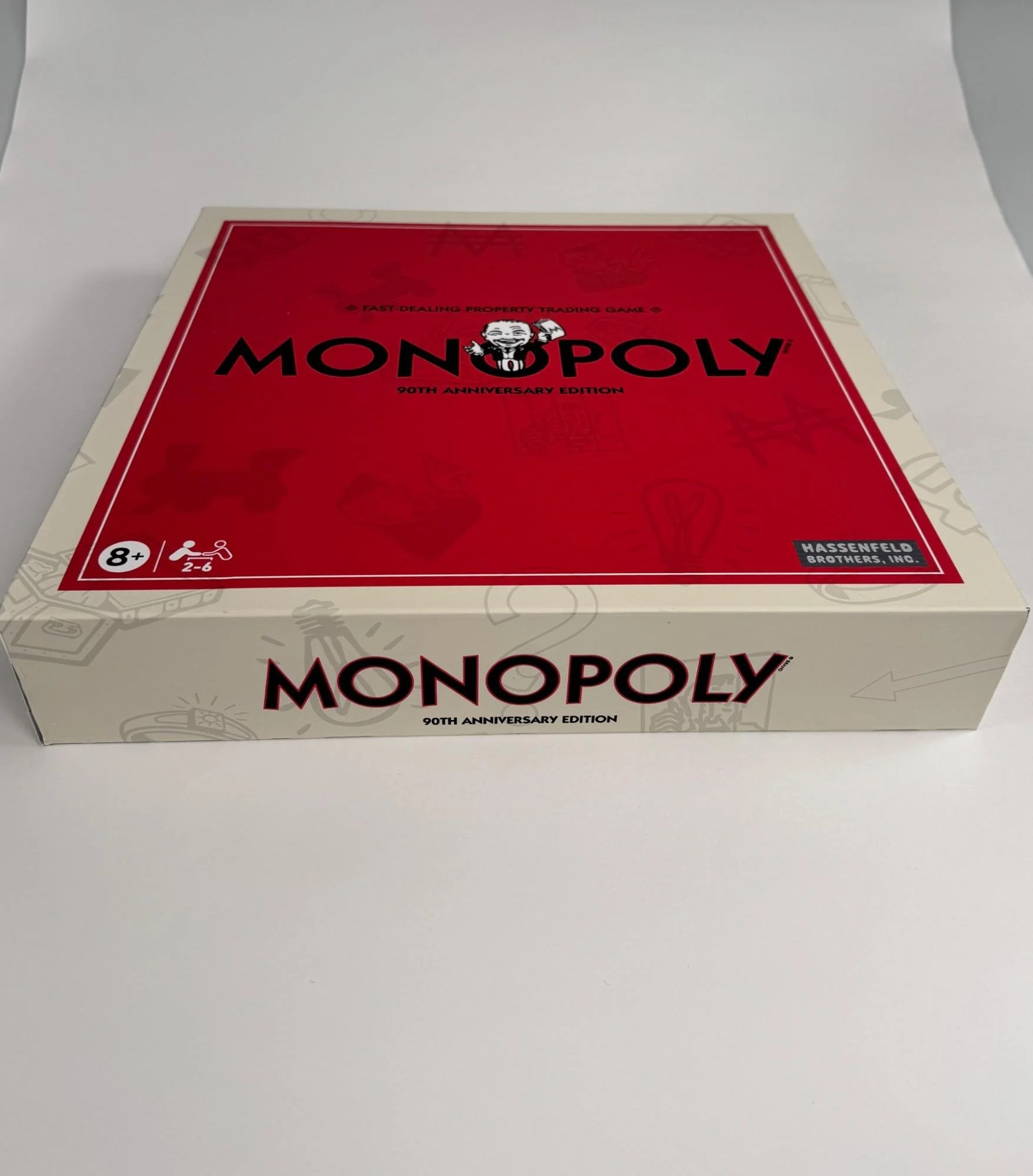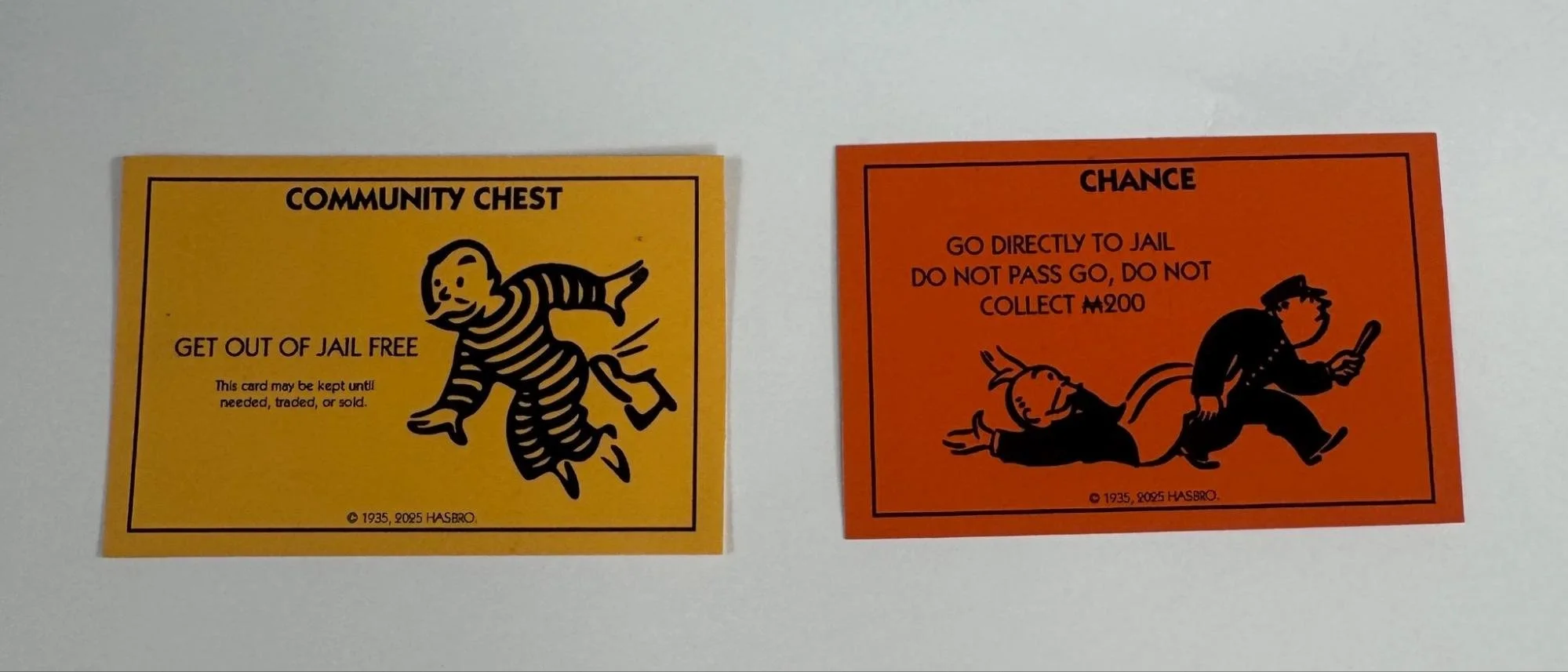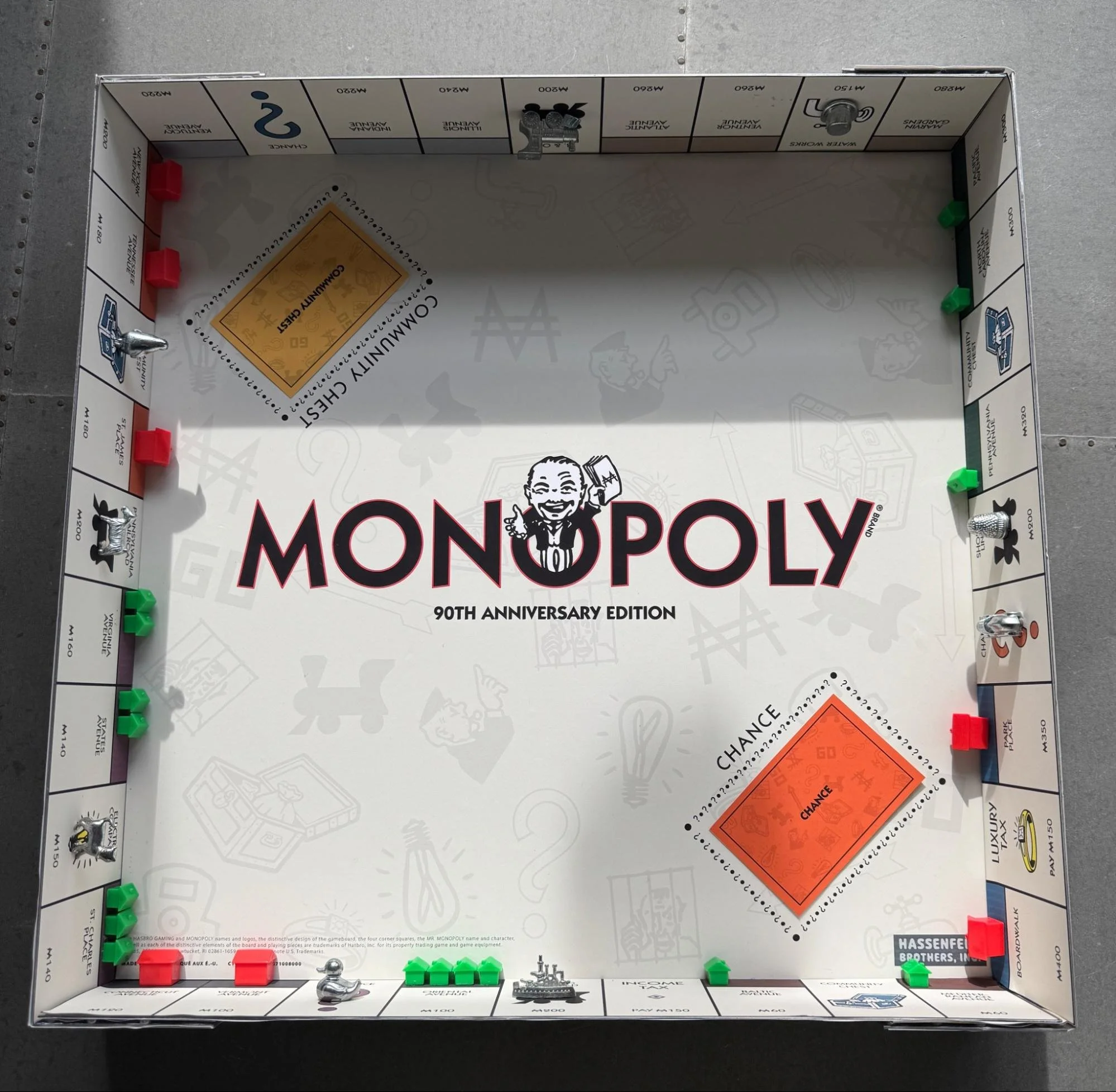
Magnetic Monopoly 90th Anniversary
14 × 14 × 3.25 in. Magnetic Monopoly Board, Cards, & Magnetic Pieces
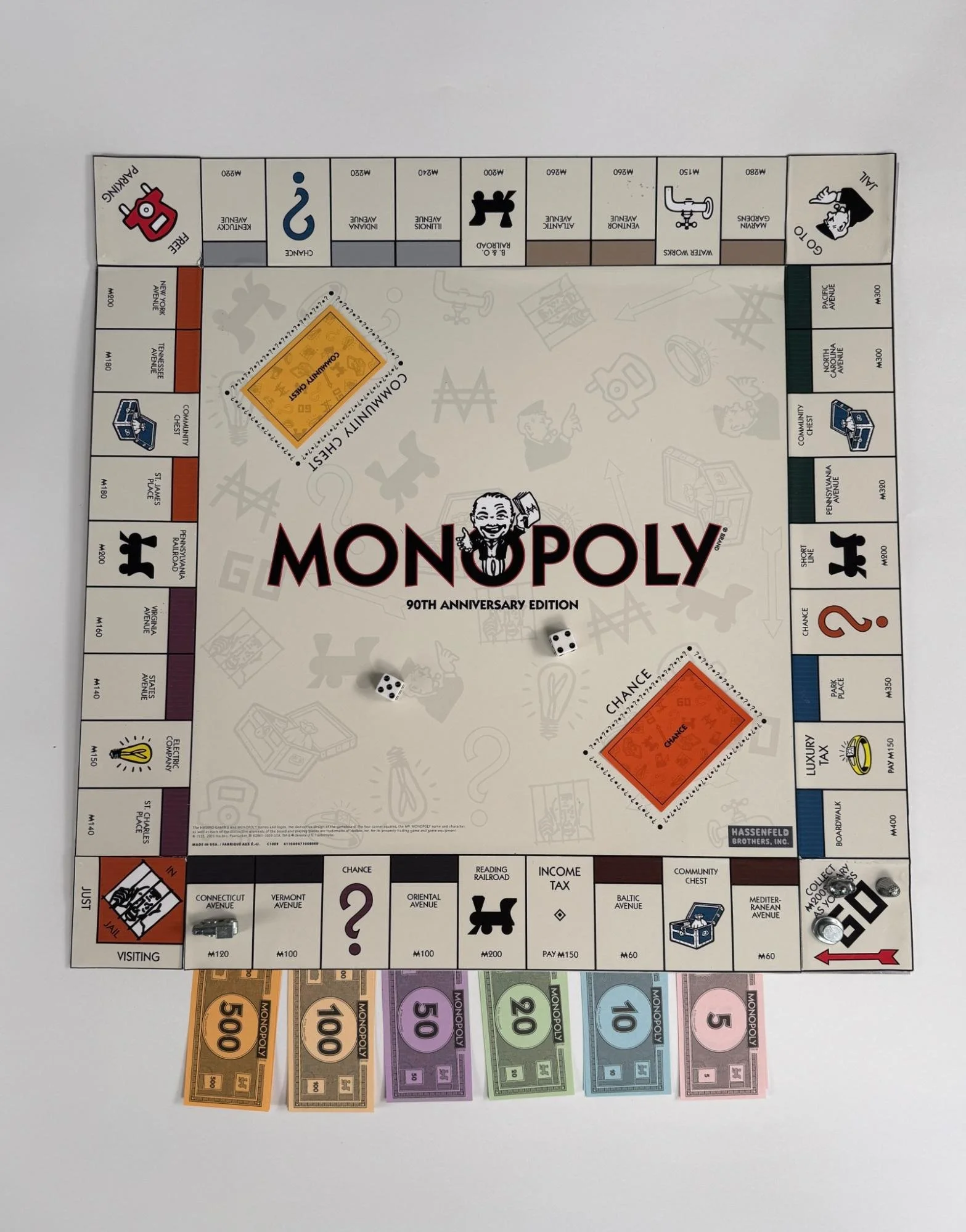
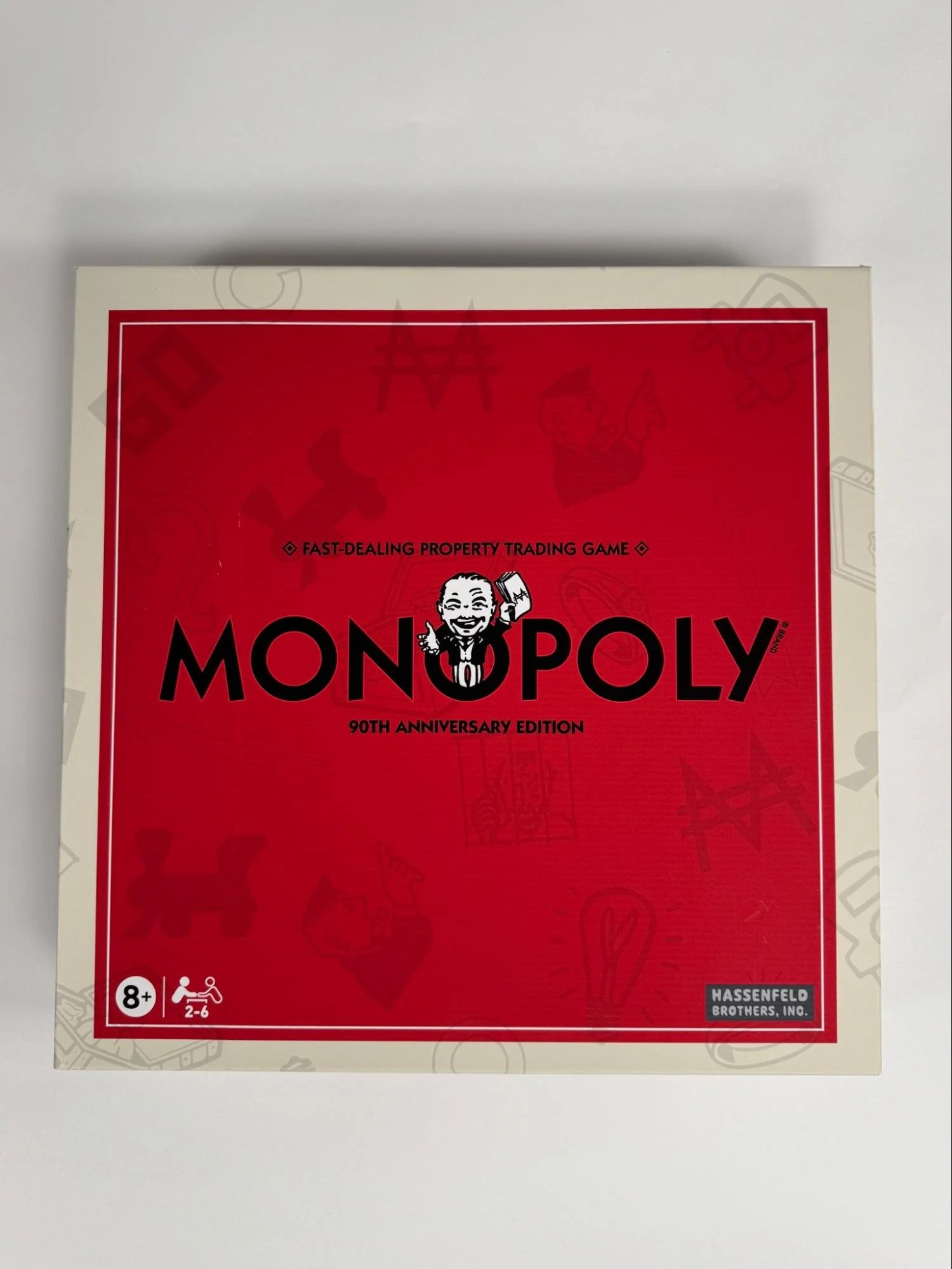
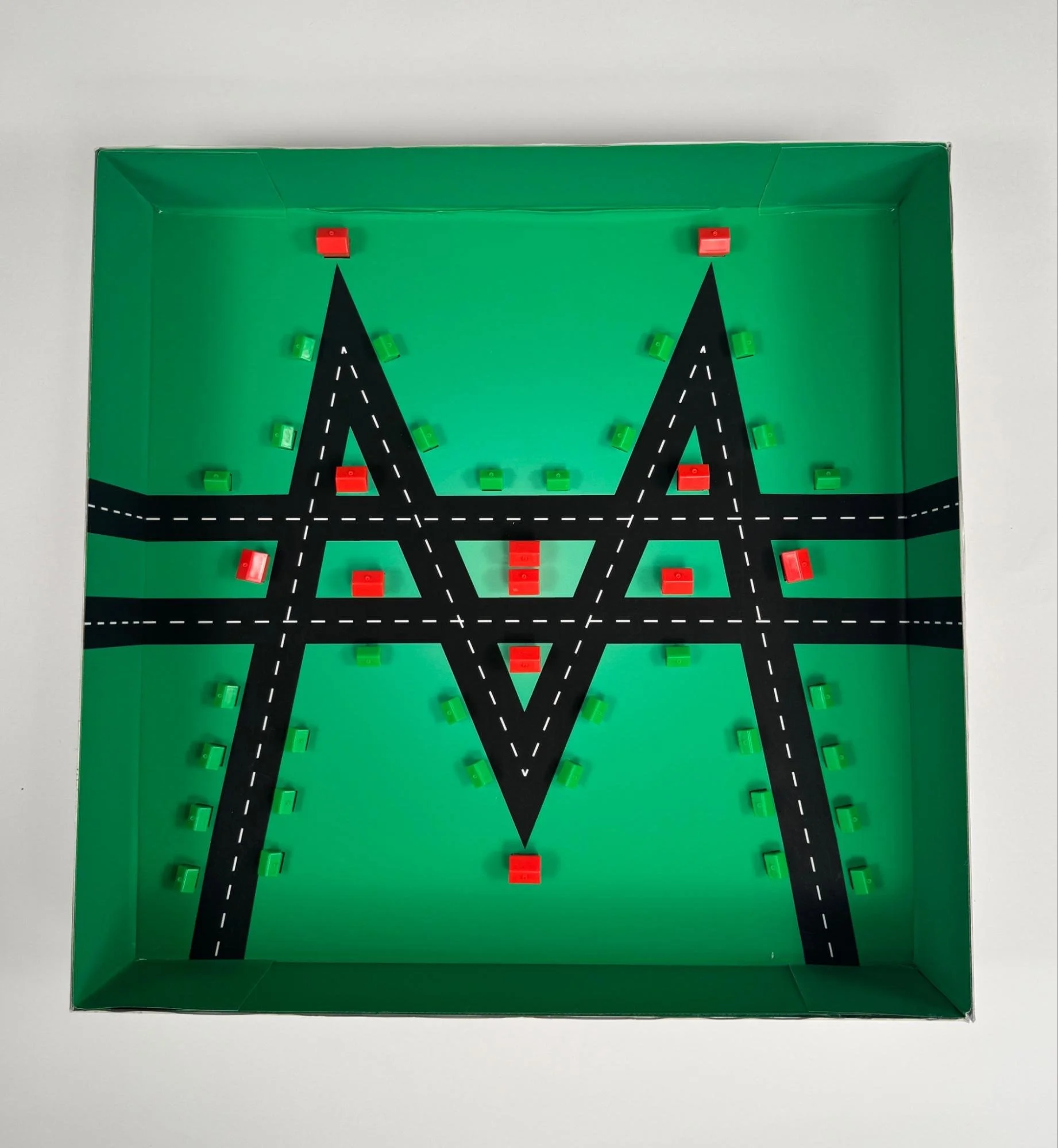
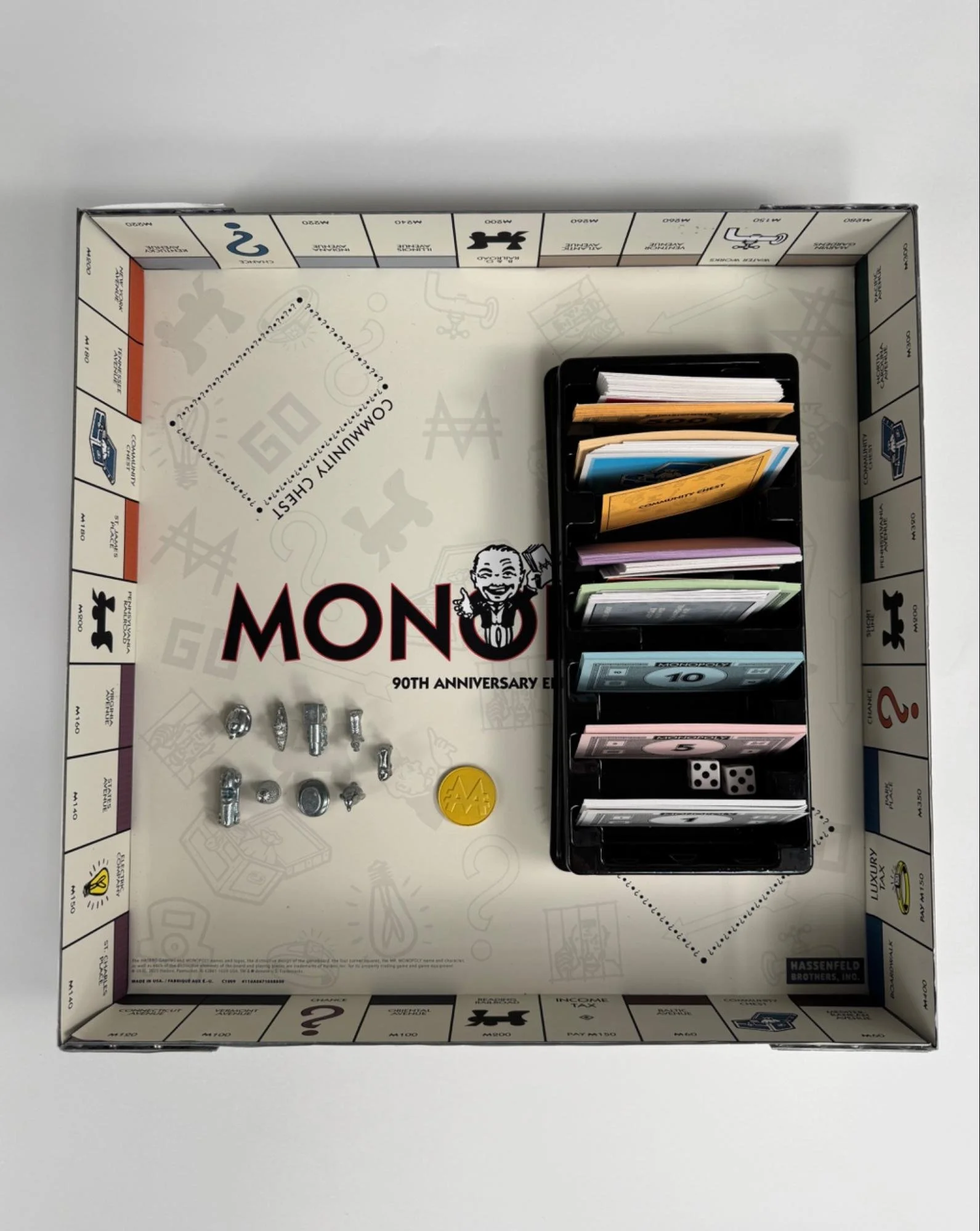
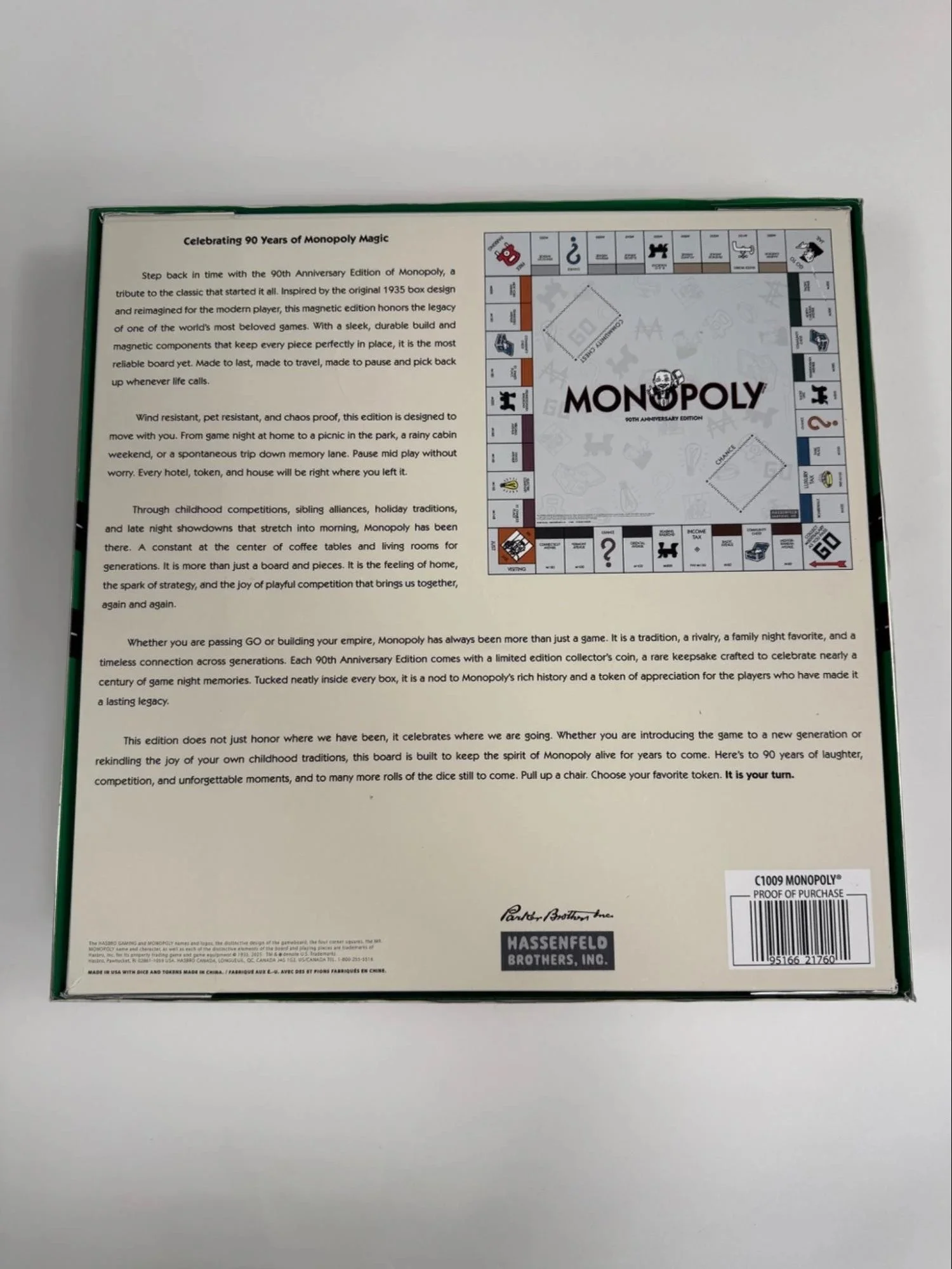
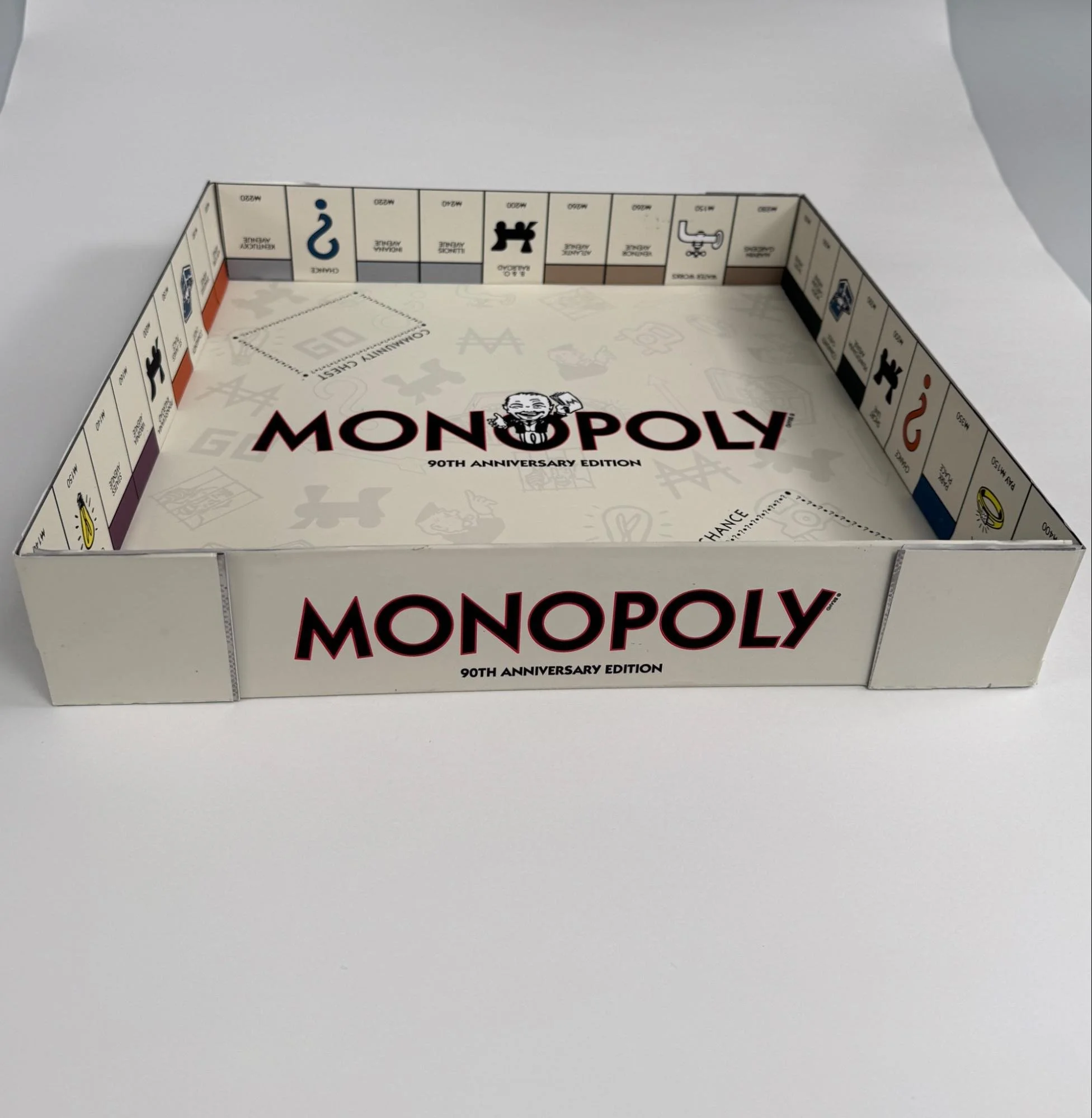
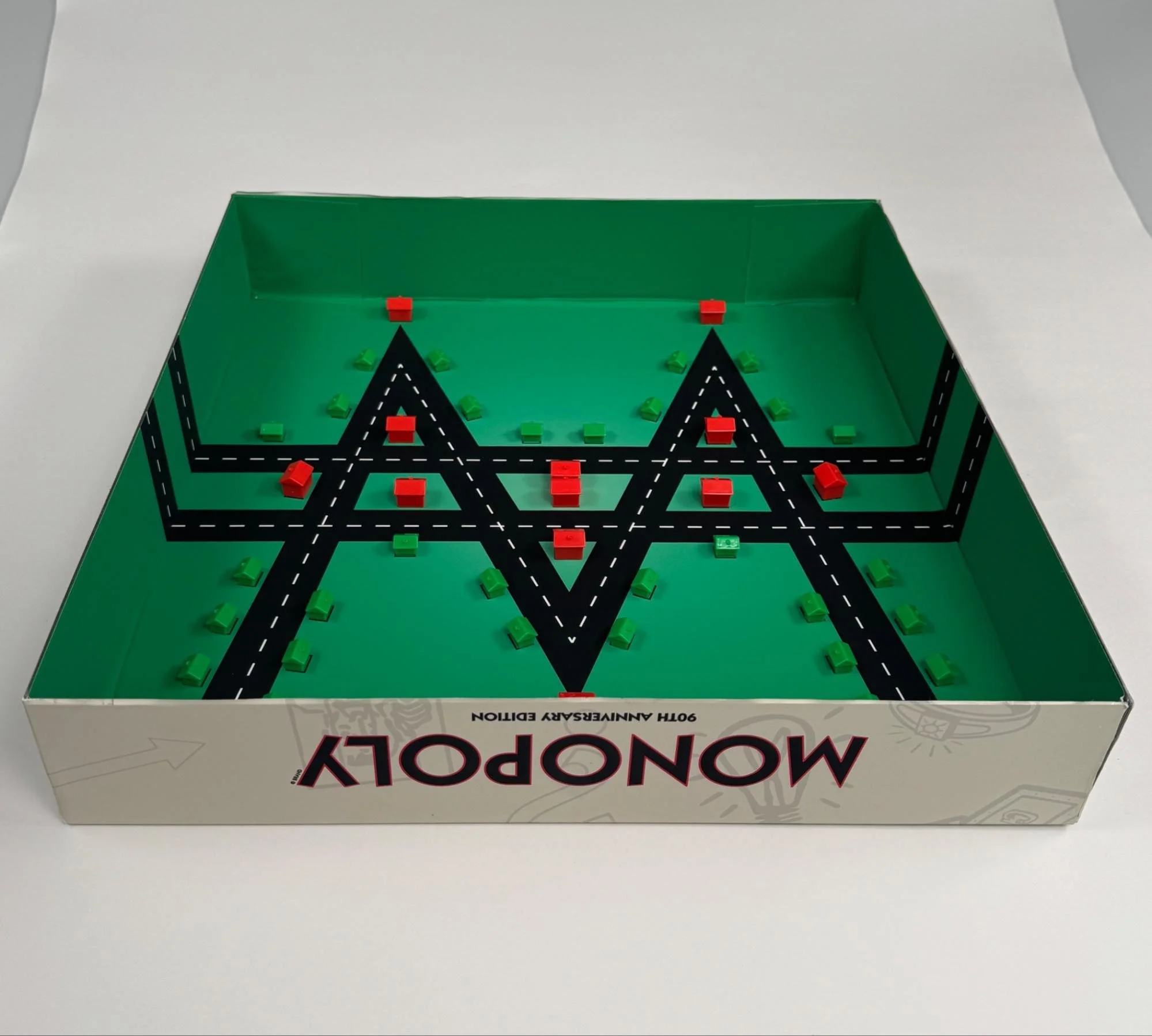
Magnetic Monopoly was created for a packaging design project focused on solving a functional problem through form. I set out to redesign the classic game into a compact version that eliminates the need for a separate box. The board folds neatly into itself, with magnets embedded in each piece so the long game of Monopoly can be paused and resumed with ease. The result is a portable, durable design that modernizes Monopoly while preserving its nostalgic appeal. Learn more about my process below.
Initial Research
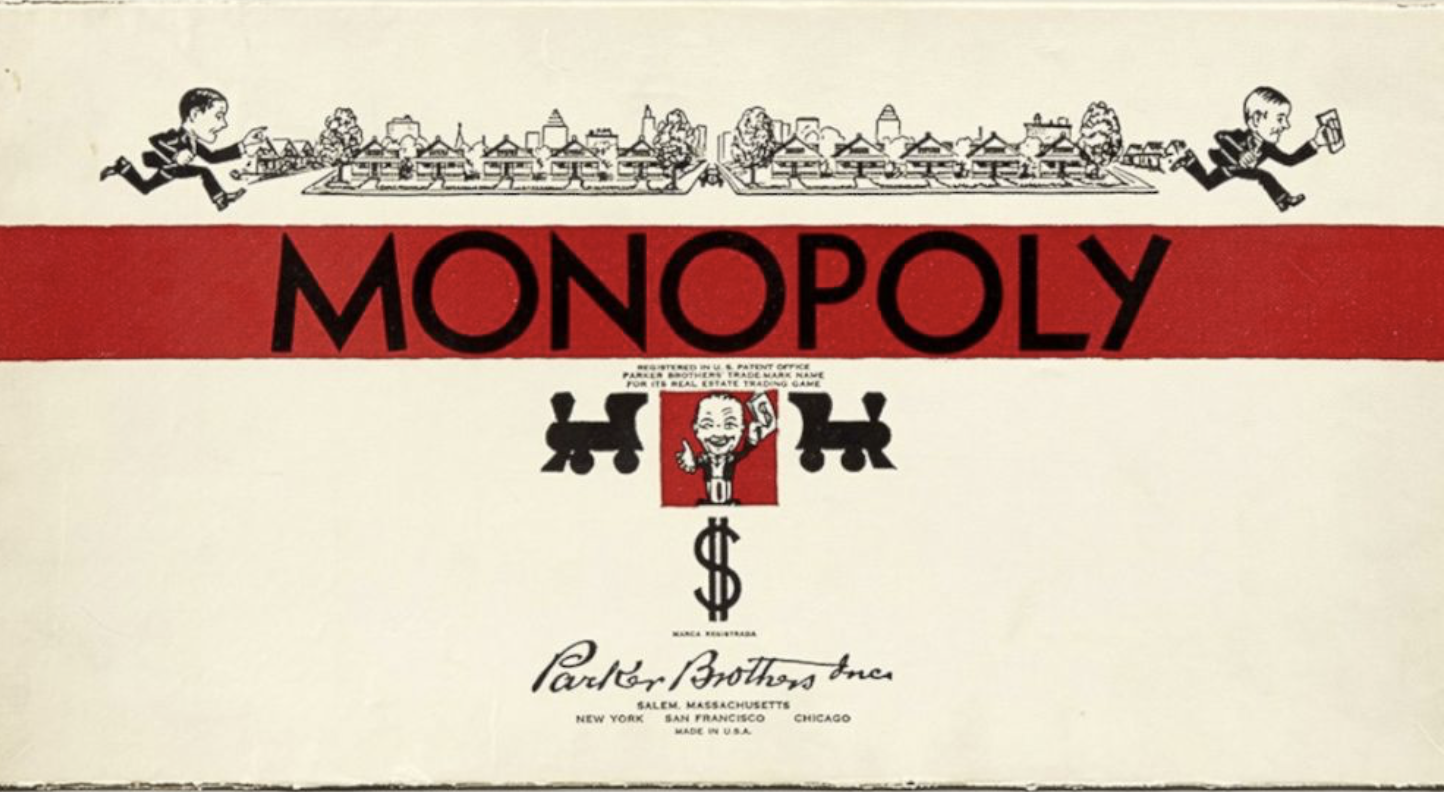
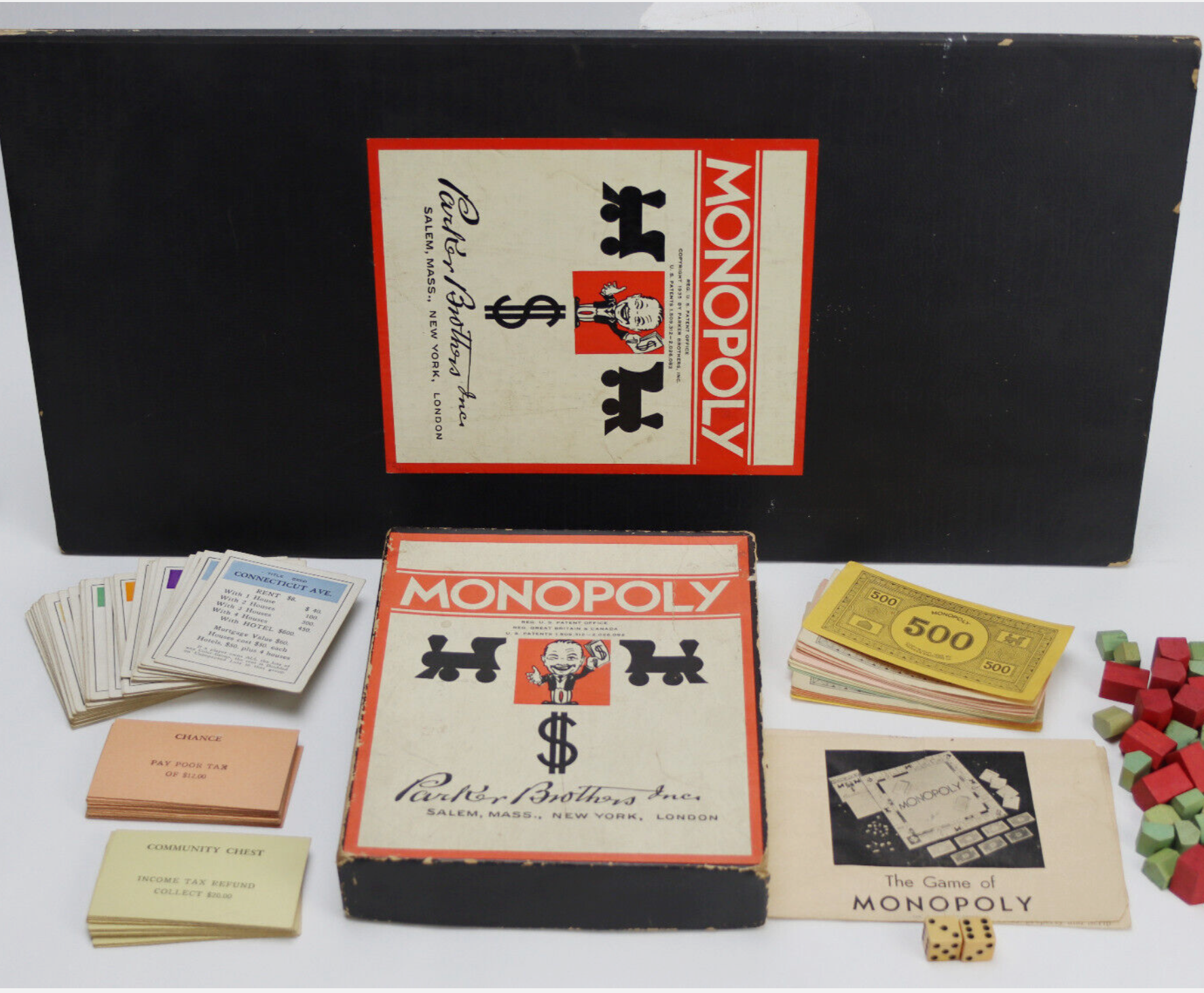
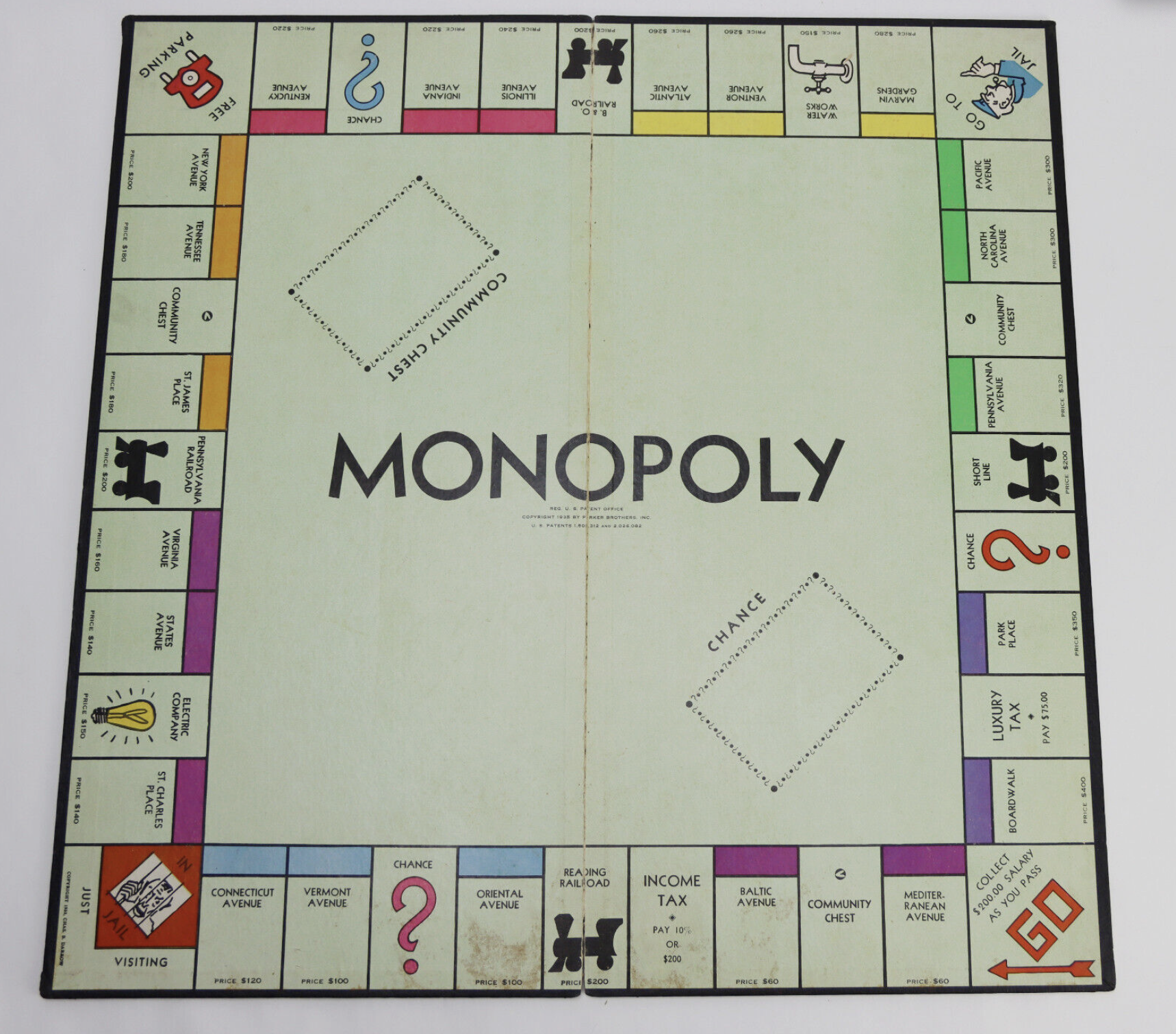
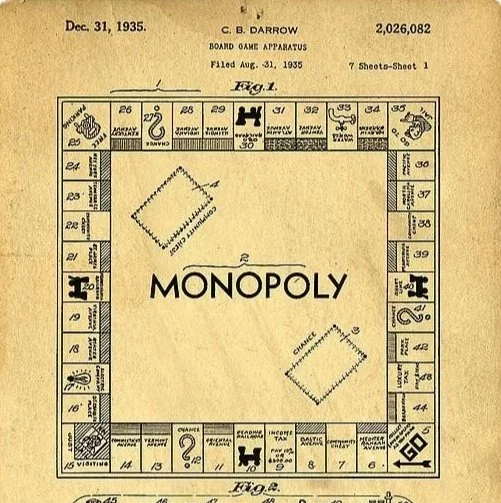
I began by studying common frustrations with Monopoly, including its long gameplay, excess pieces, and lack of portability. To understand how the game originally functioned and was presented, I researched early Parker Brothers editions, referencing 1930s industrial colors, vintage typography, and the original Mr. Monopoly illustration. This historical context helped clarify the aesthetic, material choices, and visual language that shaped the foundation of my direction
Sketch’s & Ideas
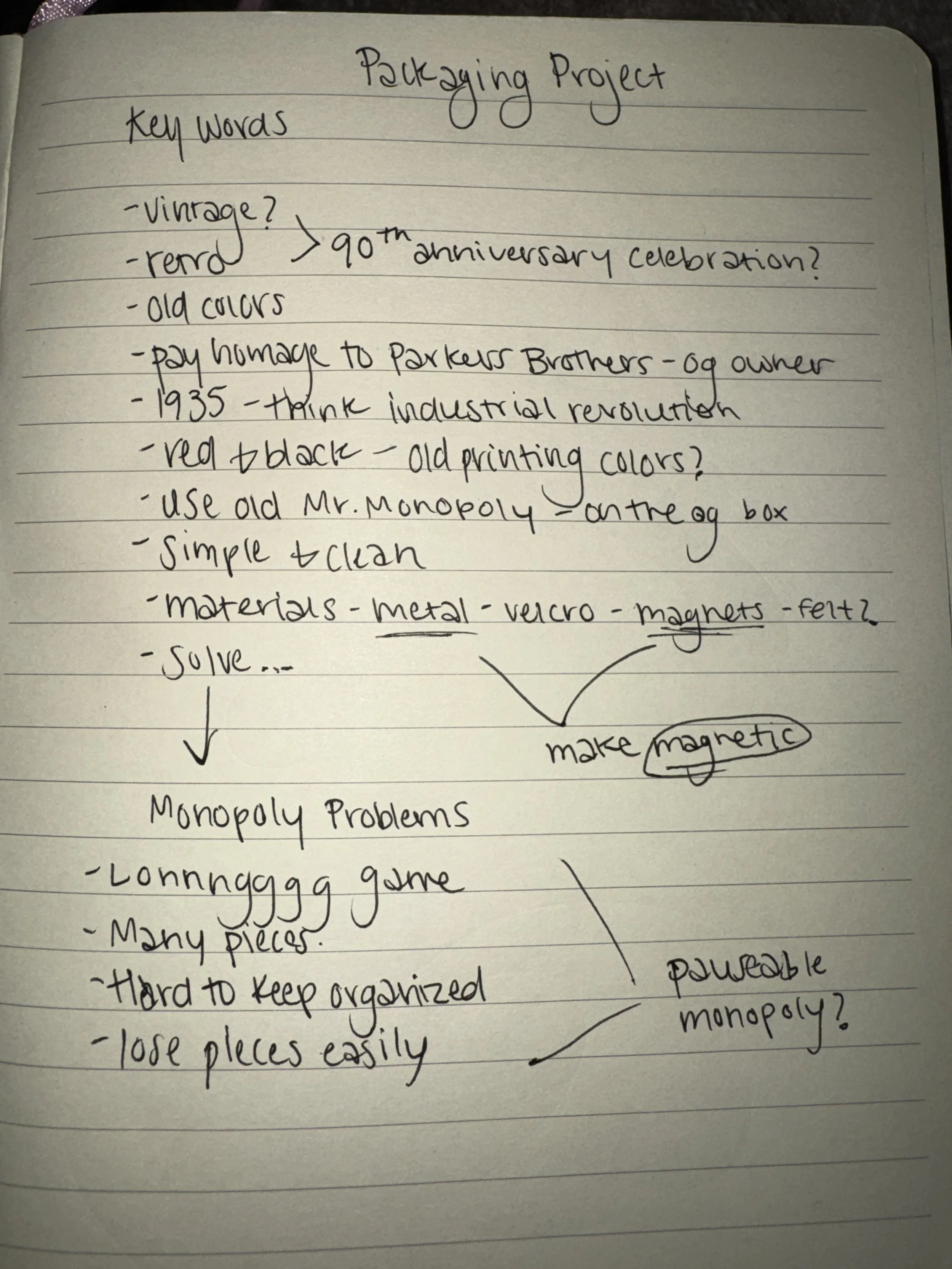
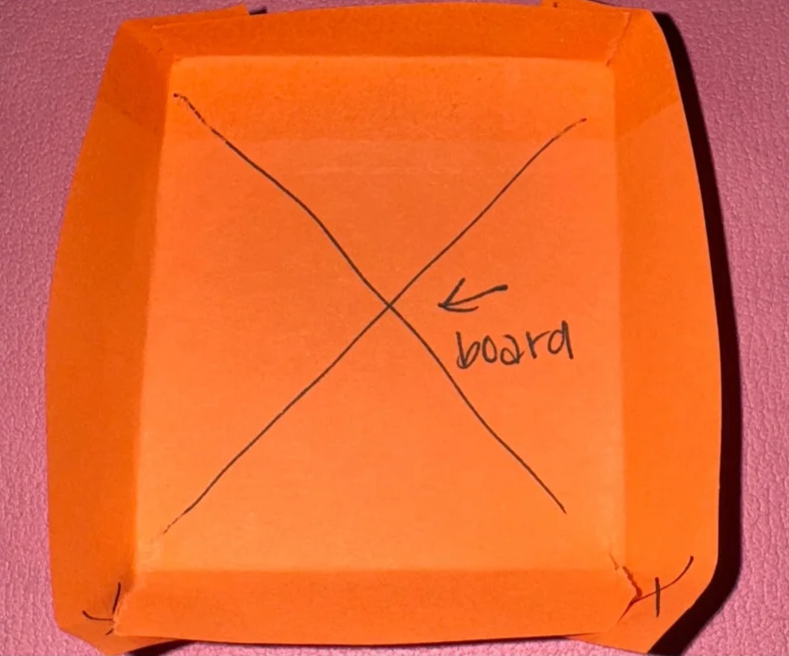
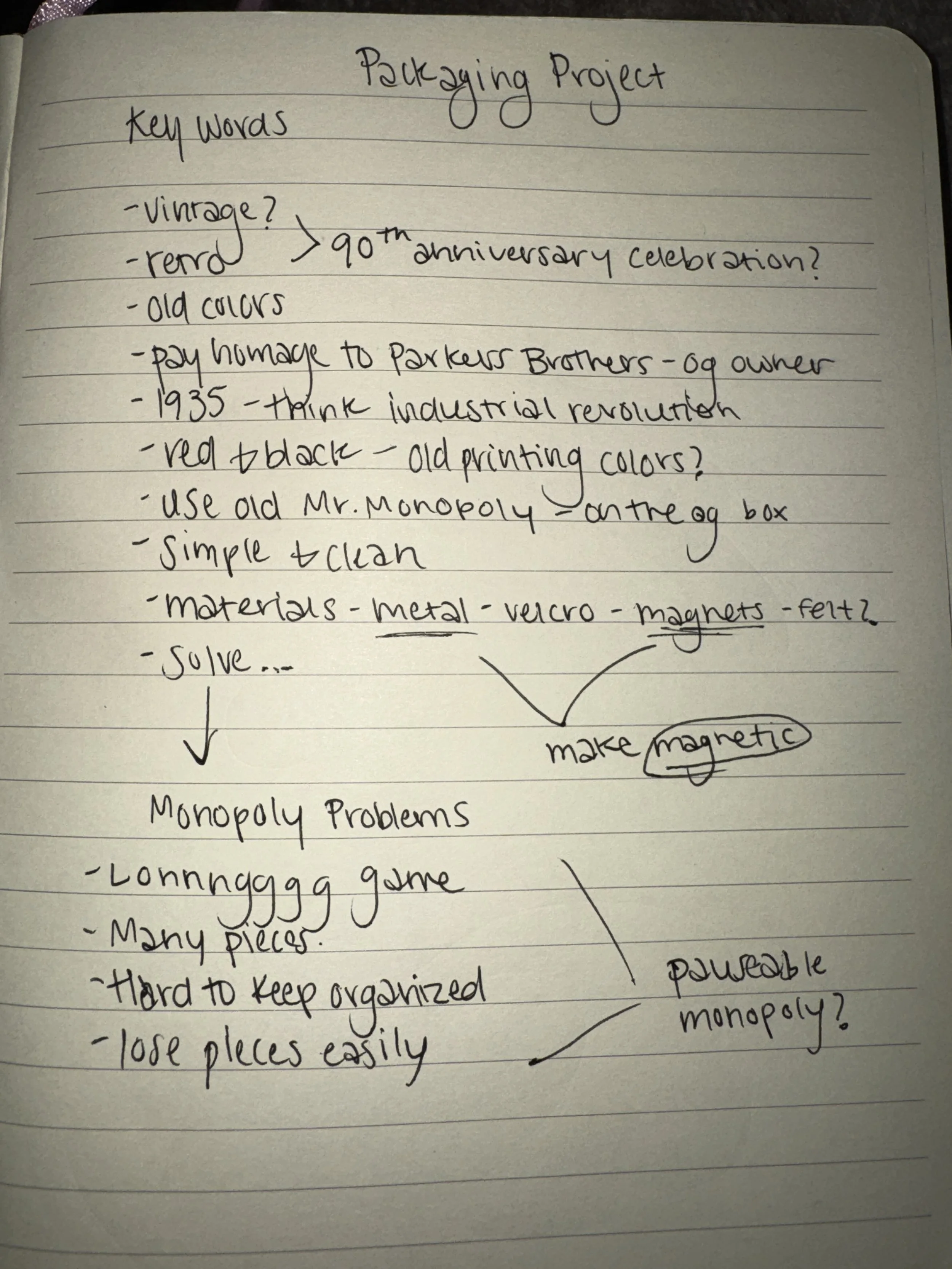
My early sketches focused on identifying the main problems I wanted to solve, from long gameplay and loose pieces to the challenge of keeping everything organized. I mapped out keywords pulled from my initial research, noting visual cues from early Parker Brothers editions like vintage colors, simple layouts, and the original Mr. Monopoly illustration.
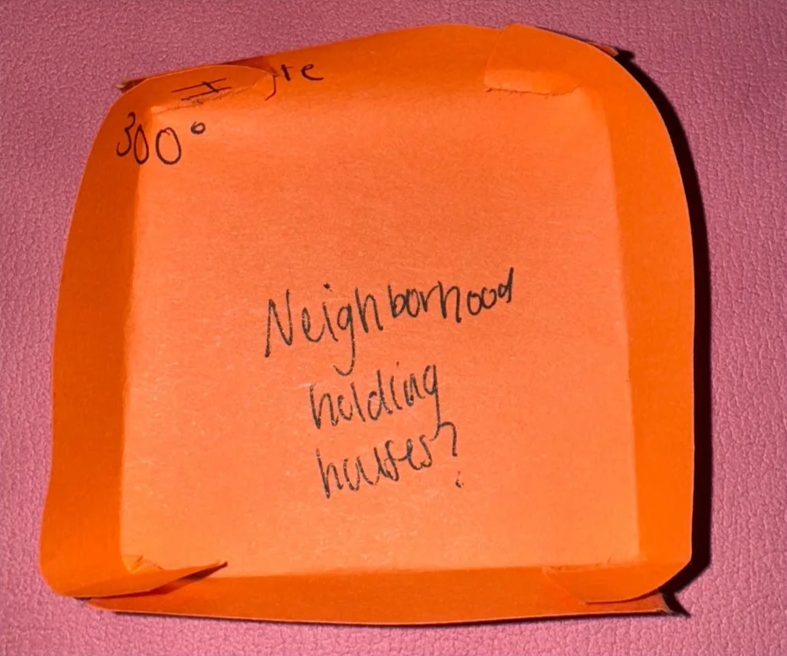
From there, my notes and rough drawings became a way to figure out how this idea could actually work. I explored how the board might fold, what materials could support a magnetic system, and how the pieces could stay contained without changing the core game. These early experiments helped me understand the mechanics and feasibility before moving into more structured prototypes.
Prototypes
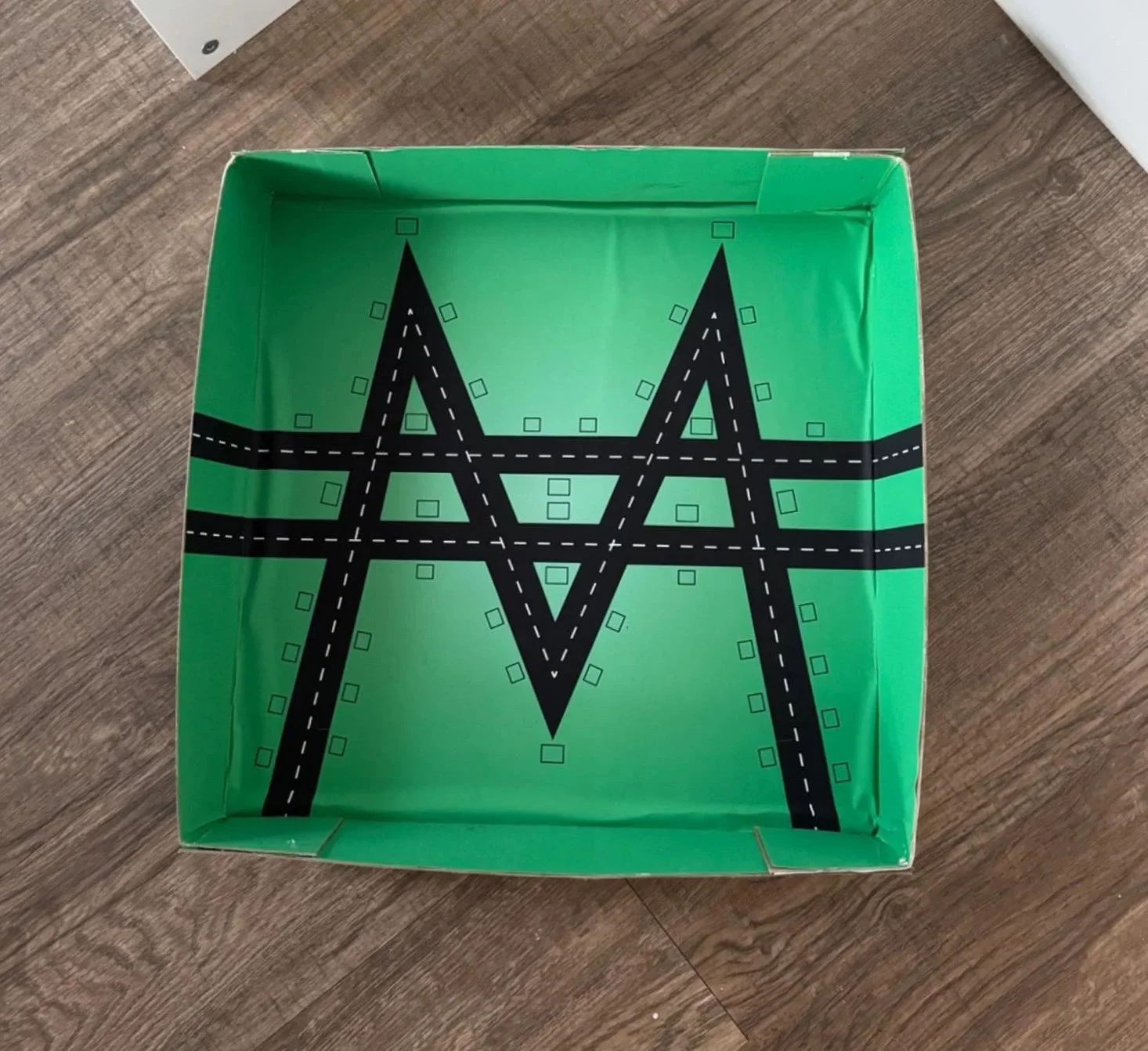
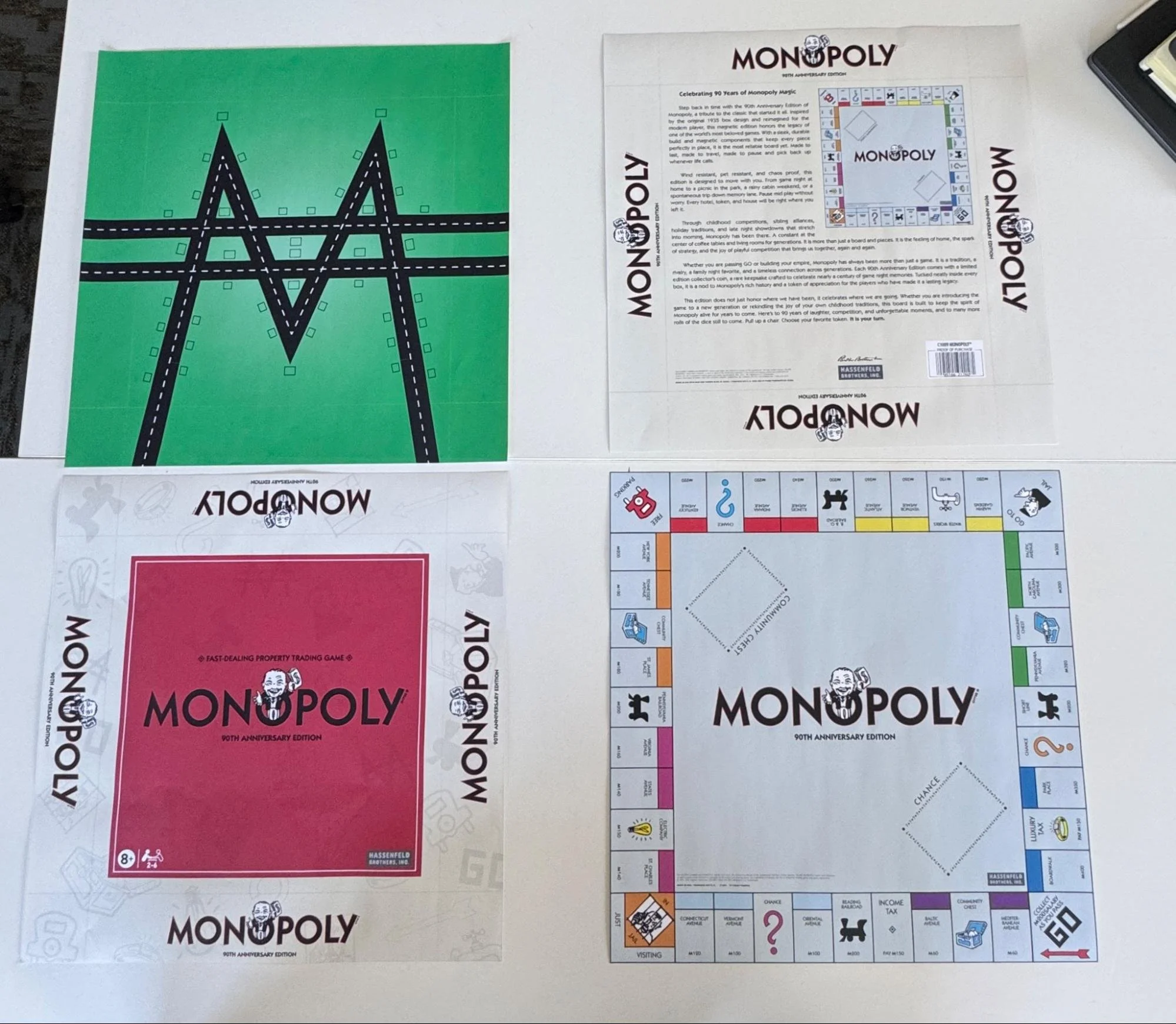
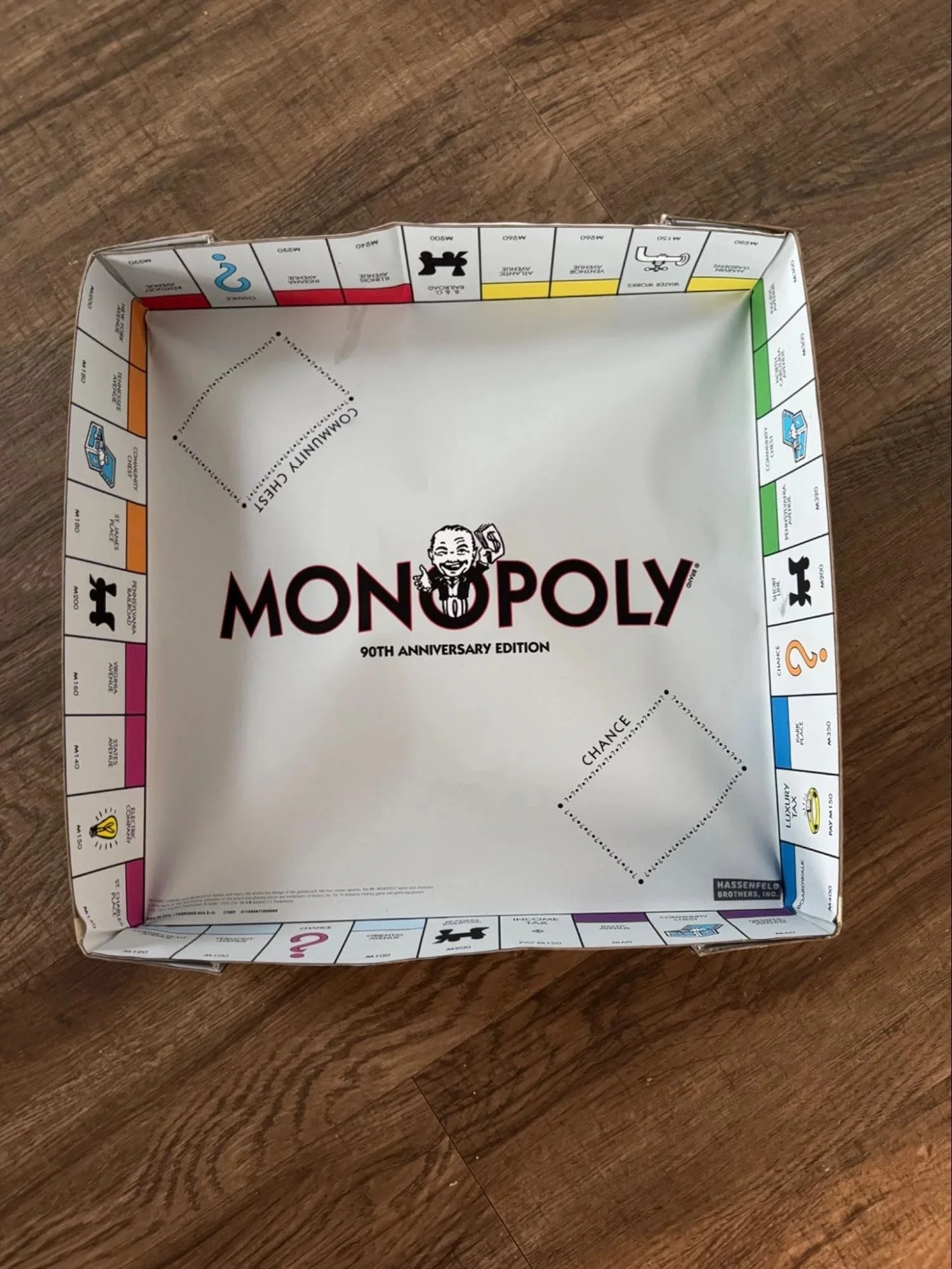
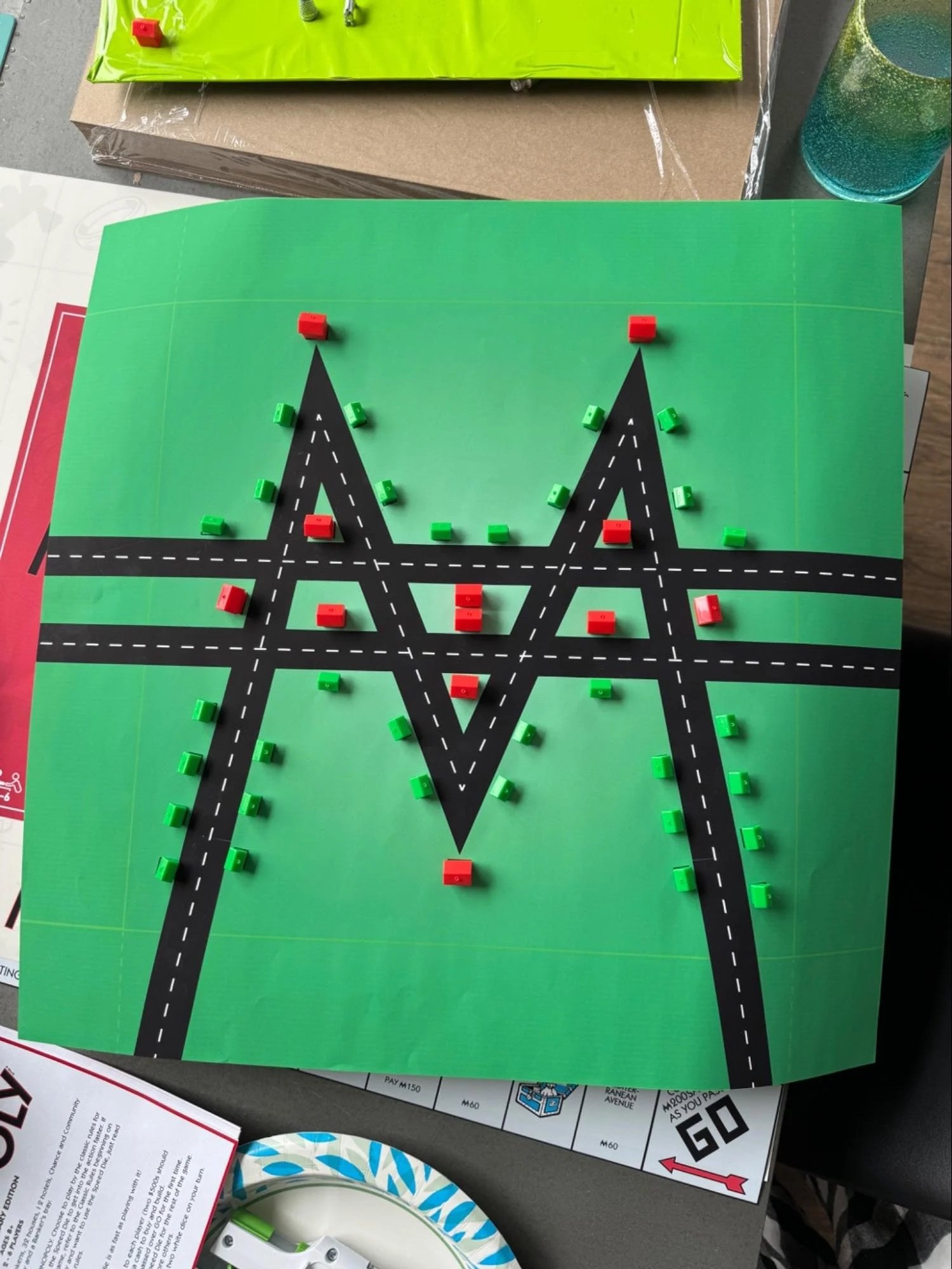
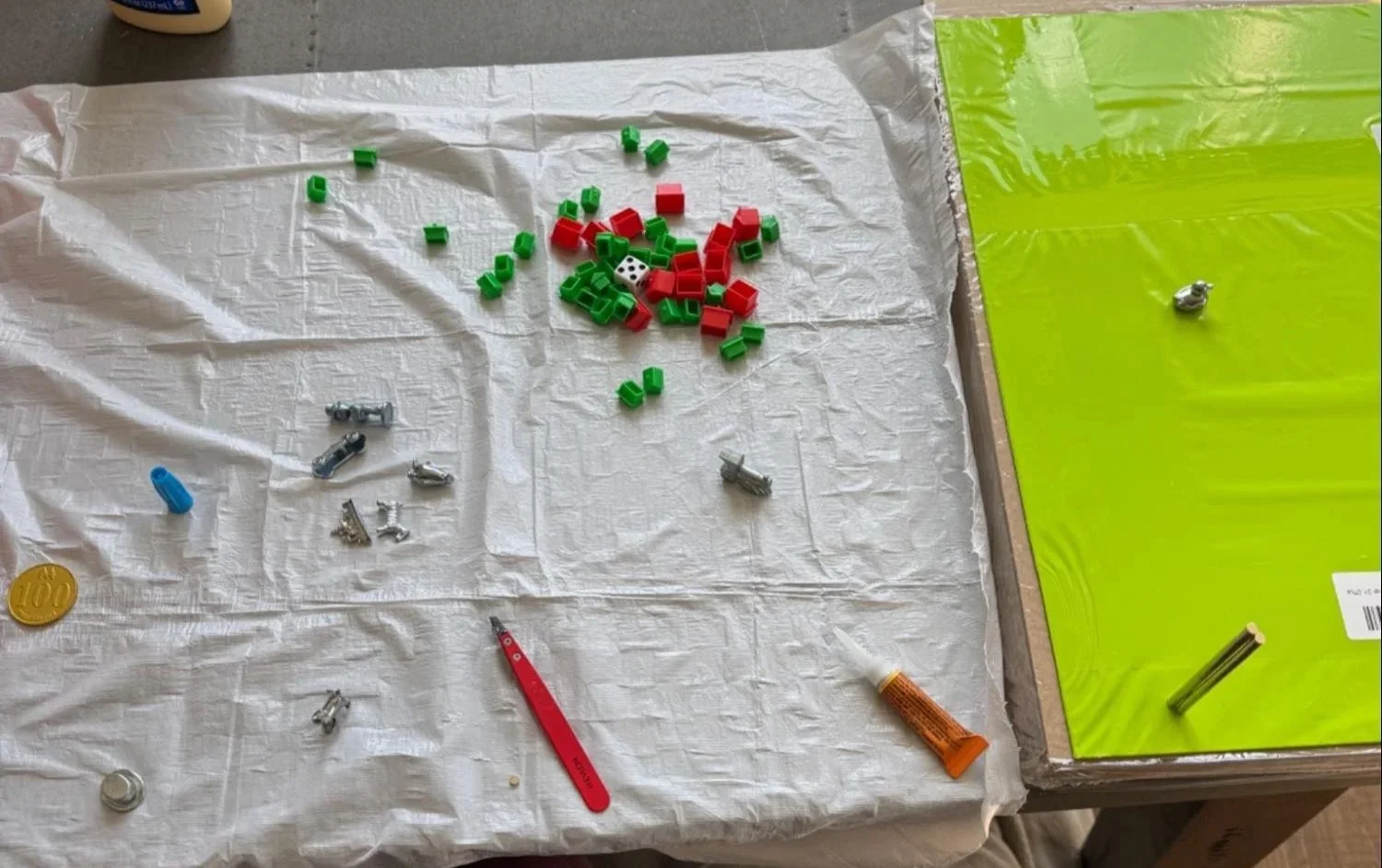
My first full-size prototype was built using chipboard for the structure and rubber cement to hold everything in place. Working at actual scale helped me understand how the board needed to fold and how durable the materials had to be. Through this round of testing, I learned which metal sheets were truly magnetic, how to cut and shape them, and how to lay printed paper cleanly over the surface. I also discovered that certain glues do not adhere to the plastic used for the houses and hotels, creating another roadblock that this stage helped me troubleshoot. This round clarified the construction requirements and informed the adjustments I made in the next iteration.
Final Design
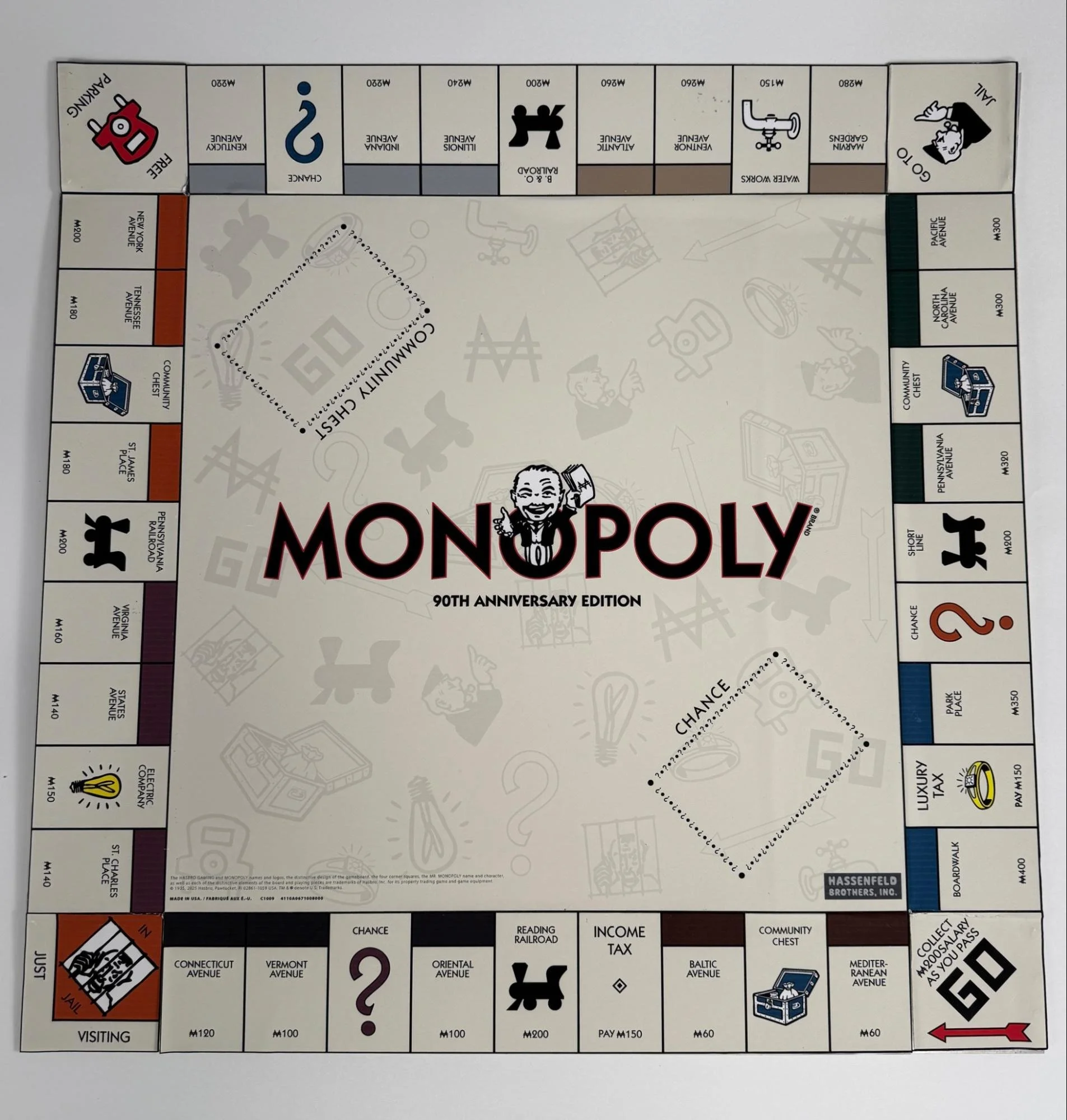
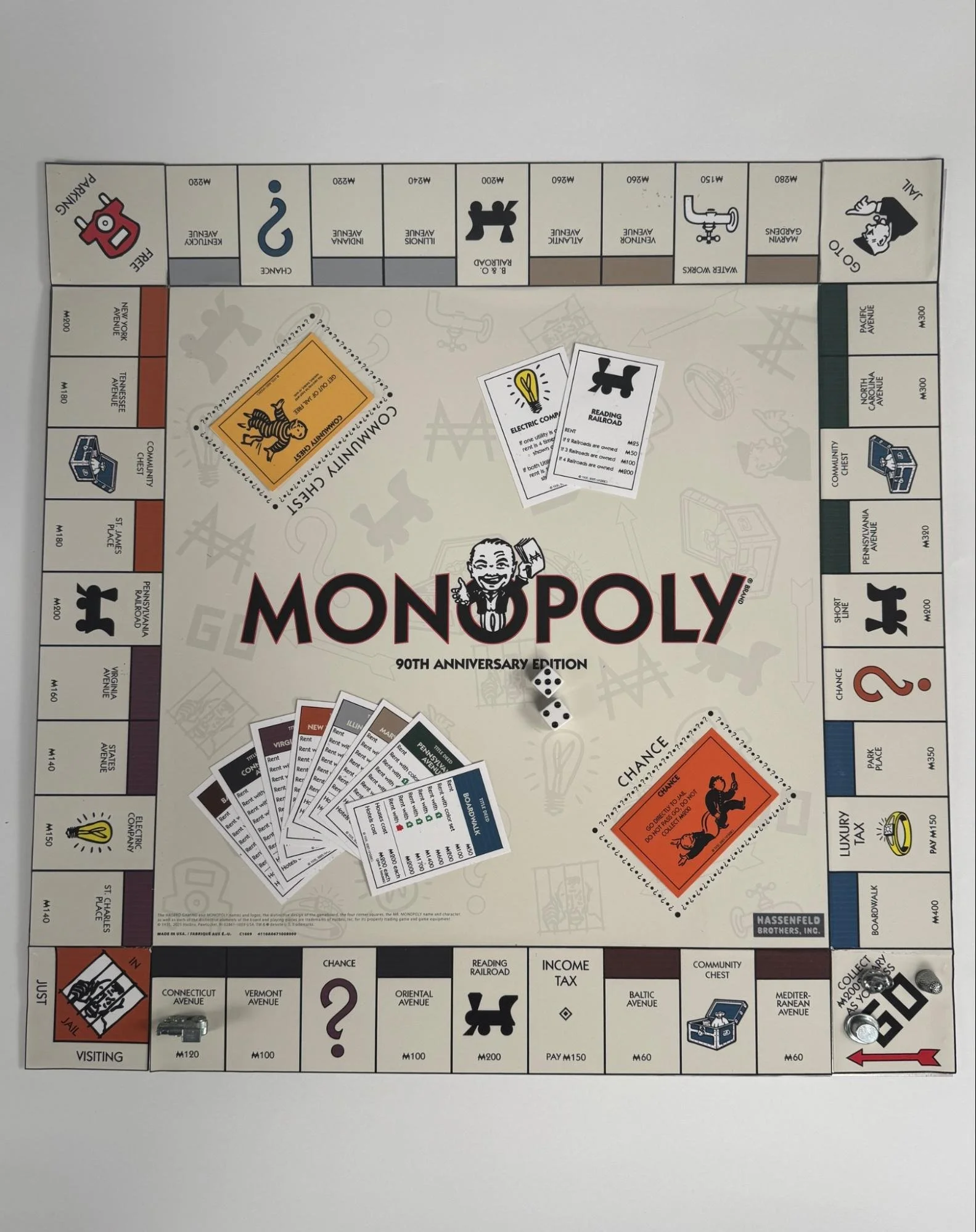
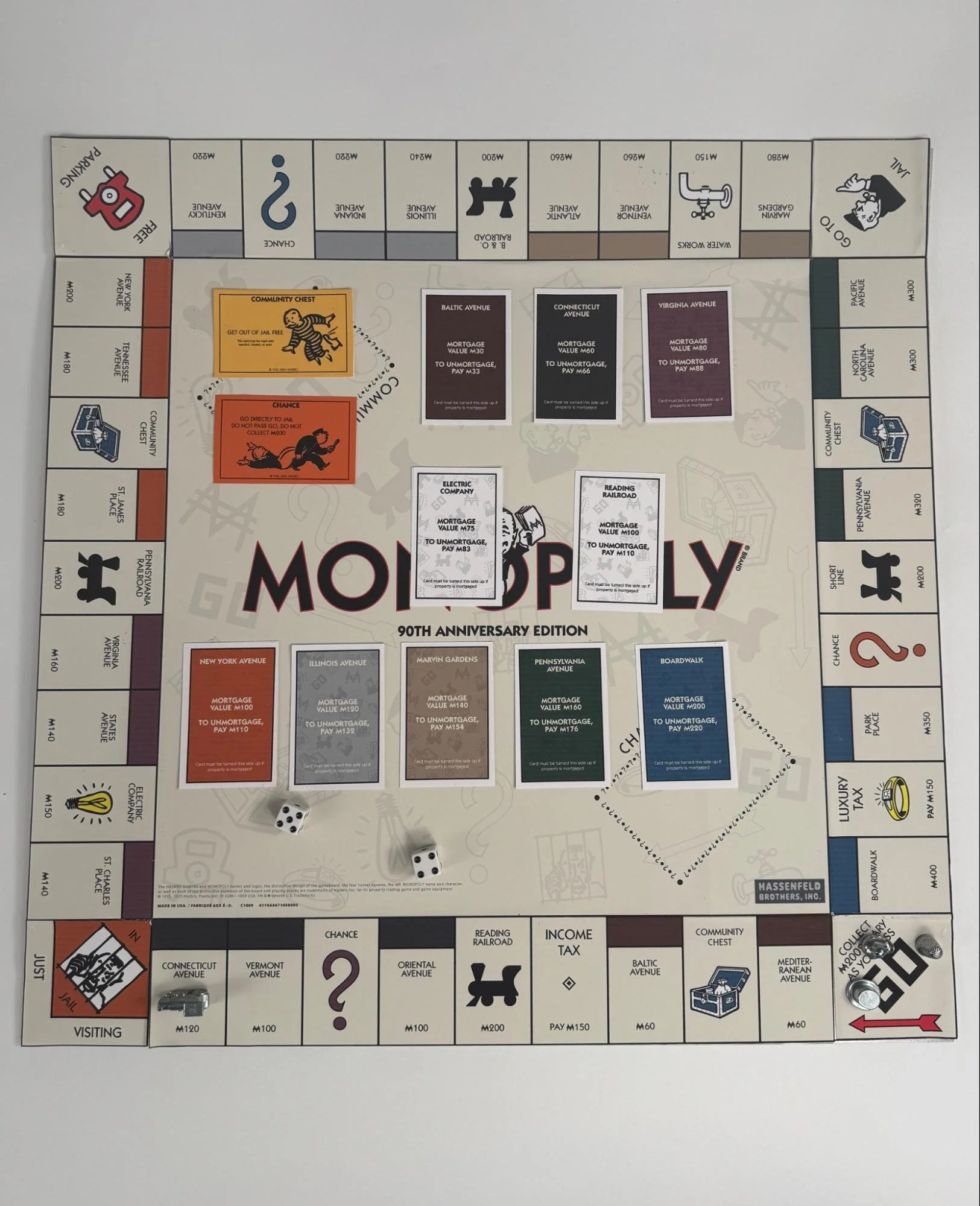
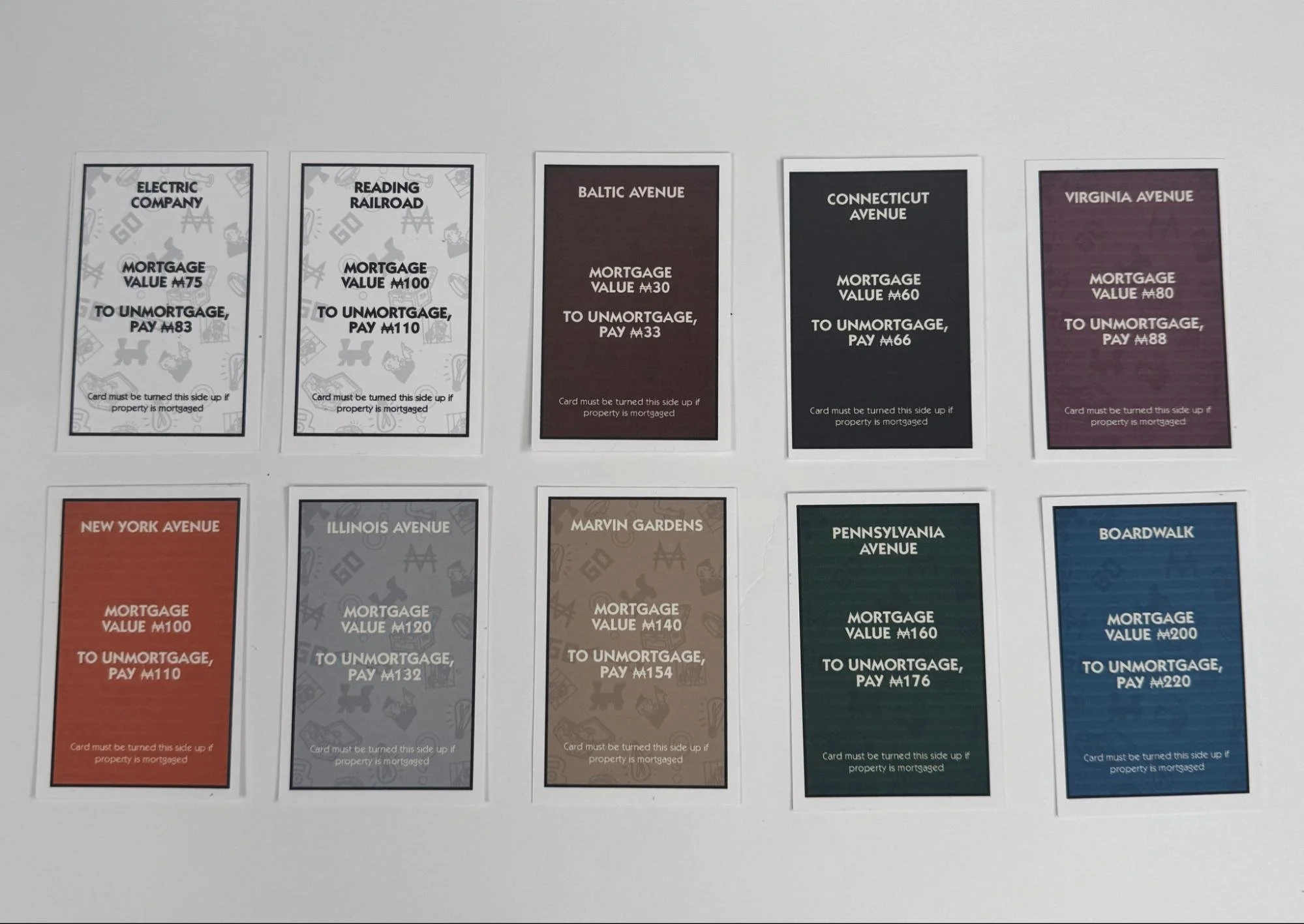
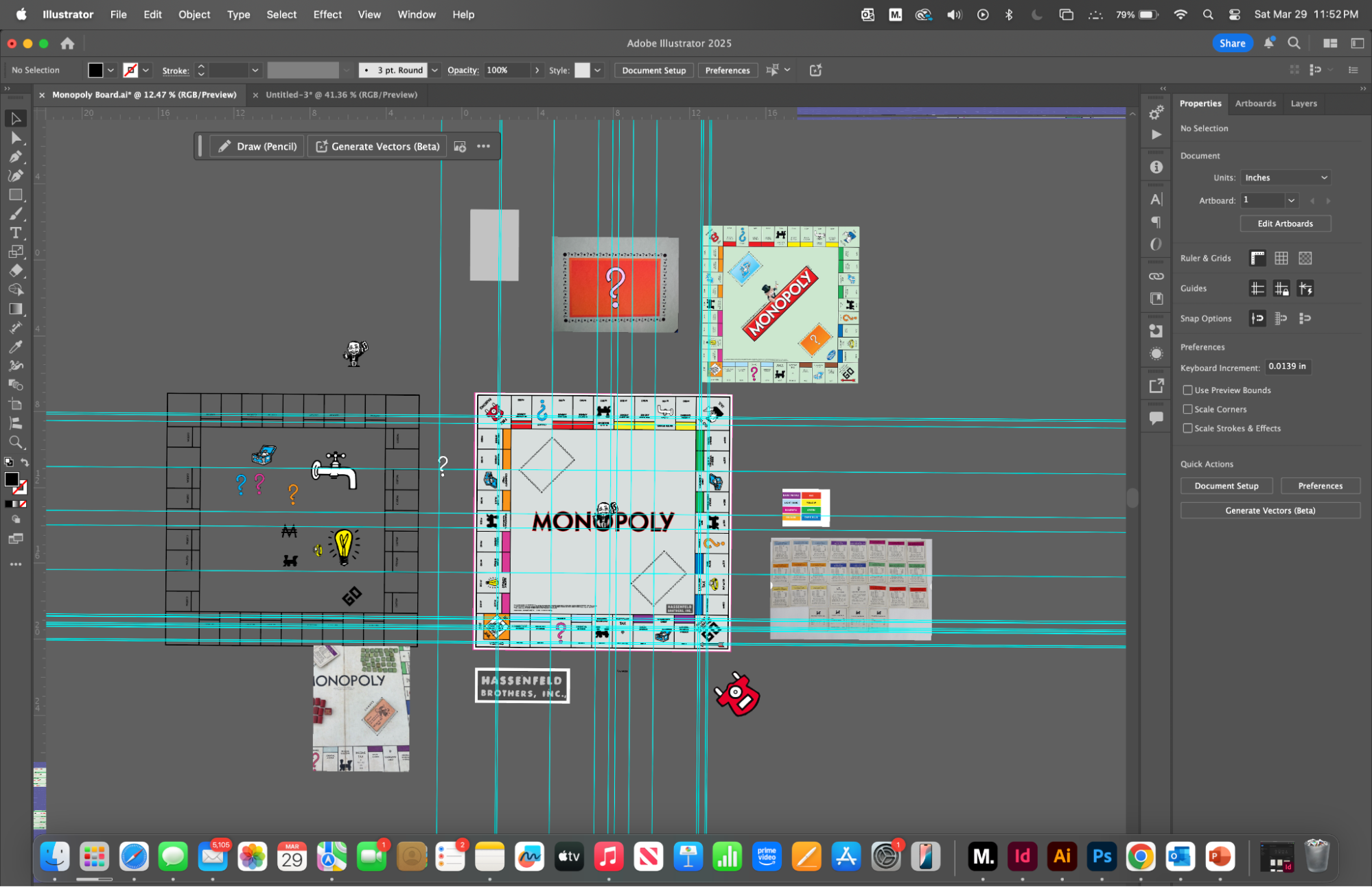
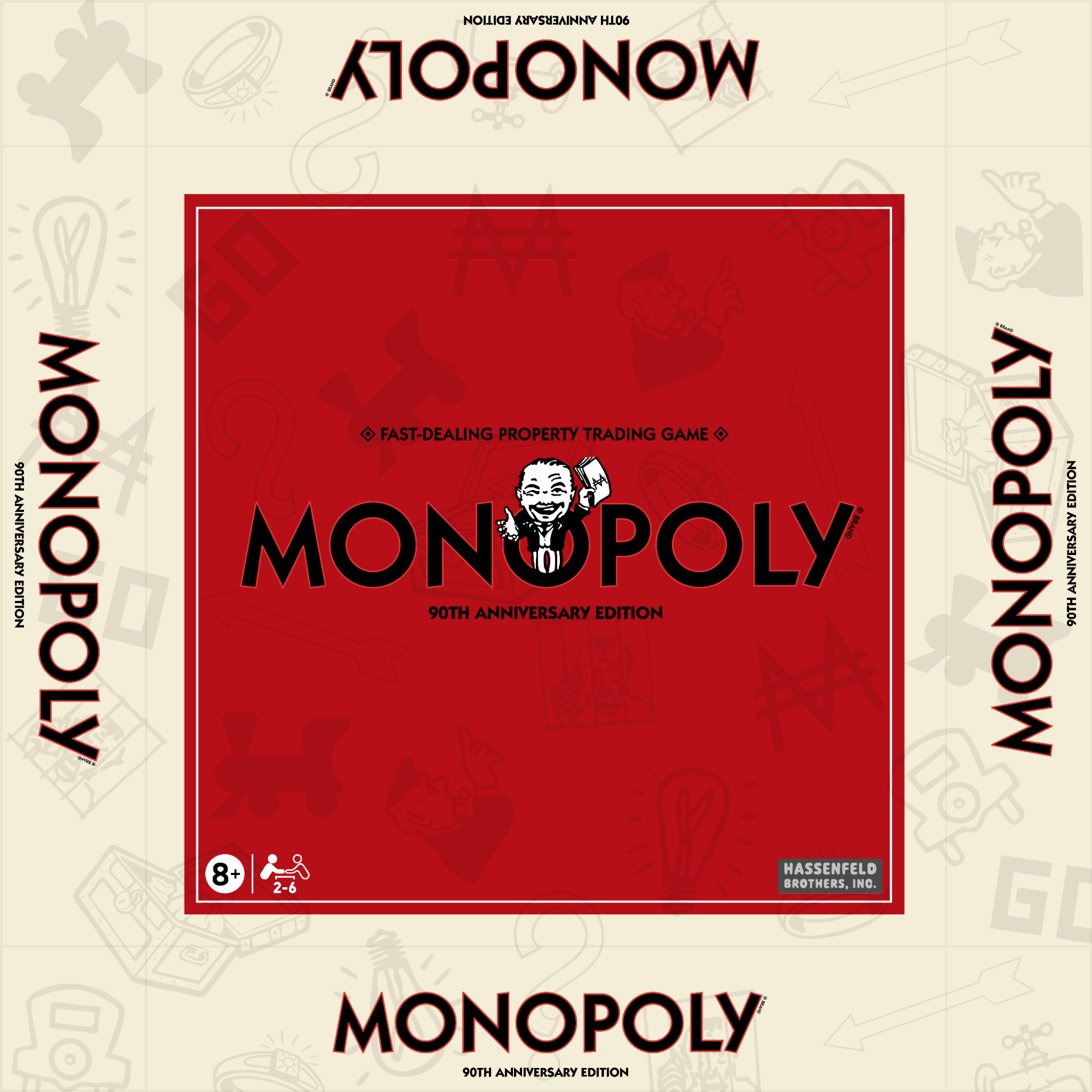
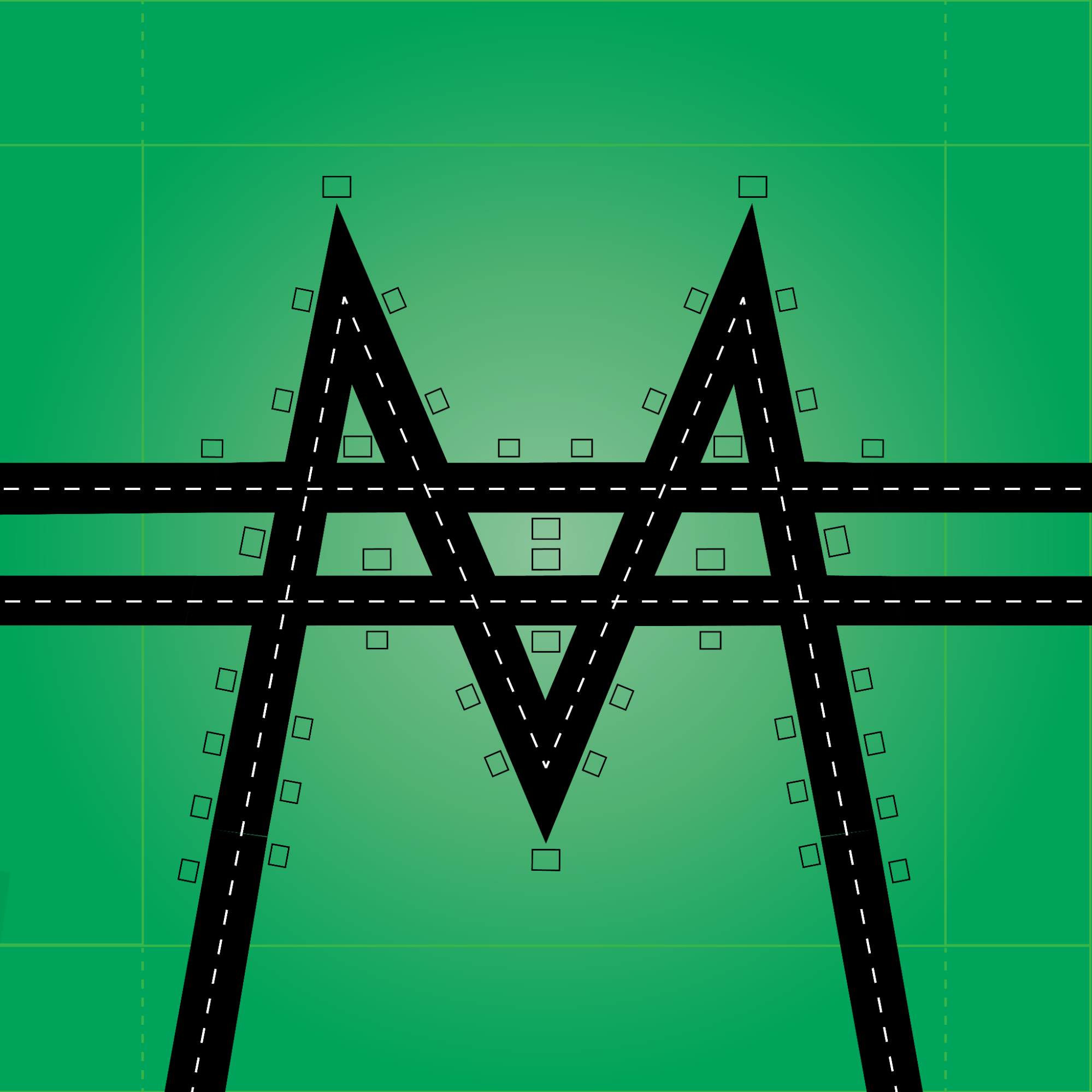
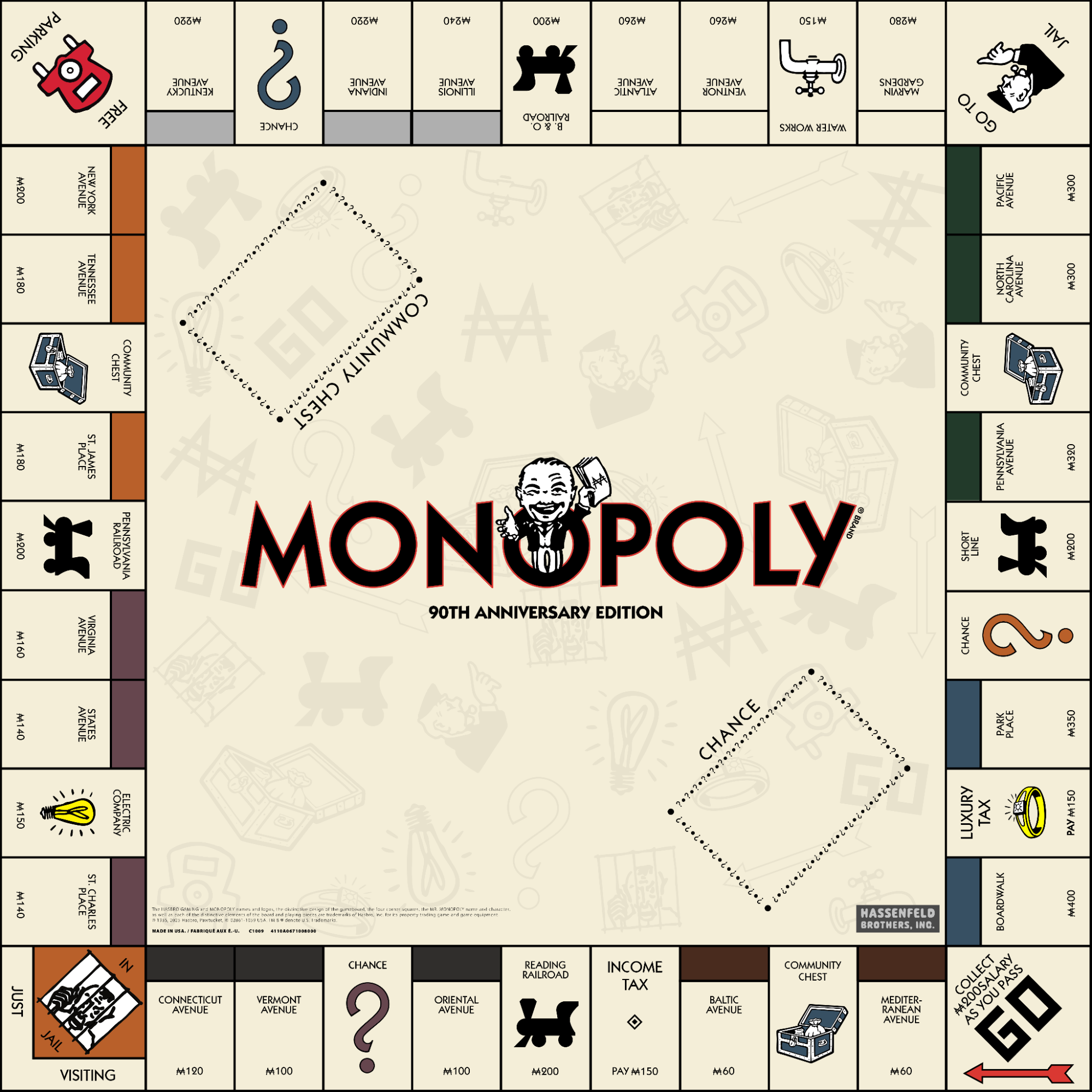
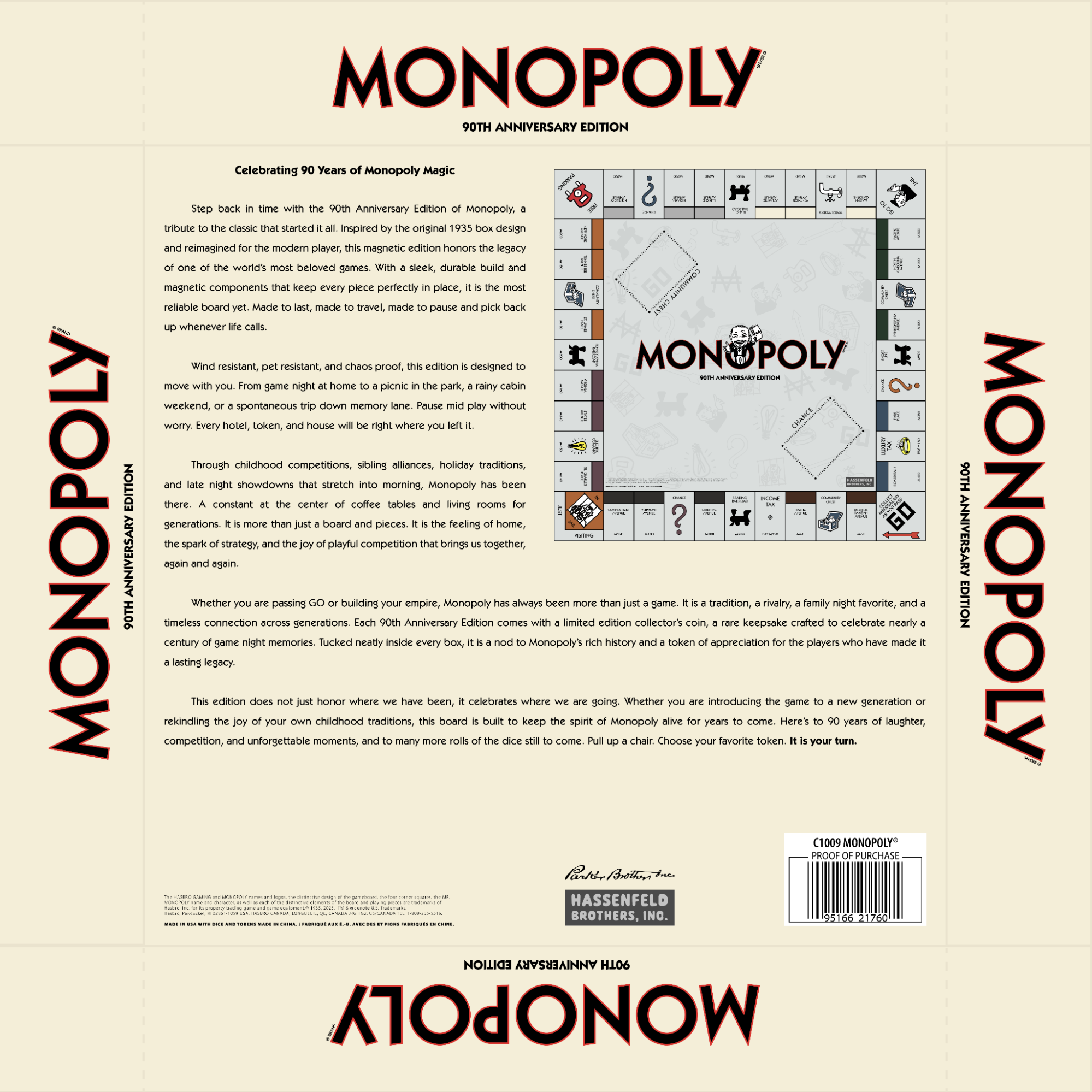
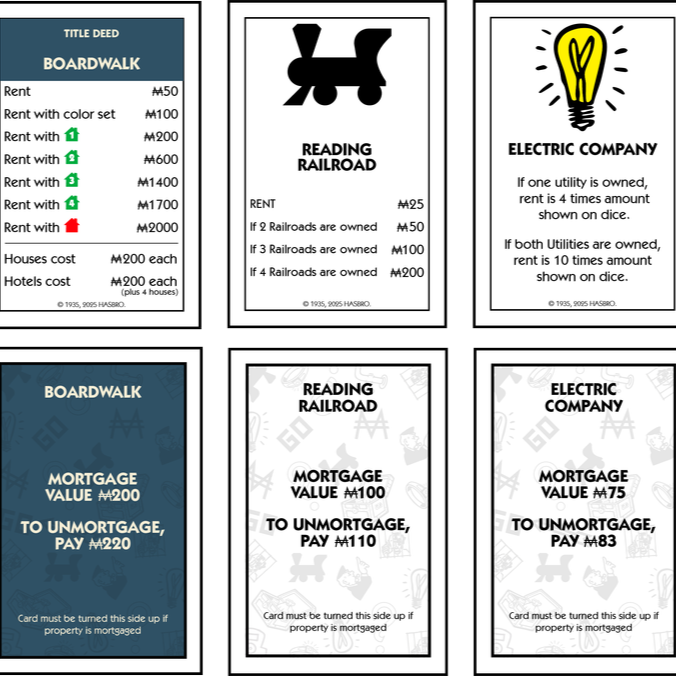
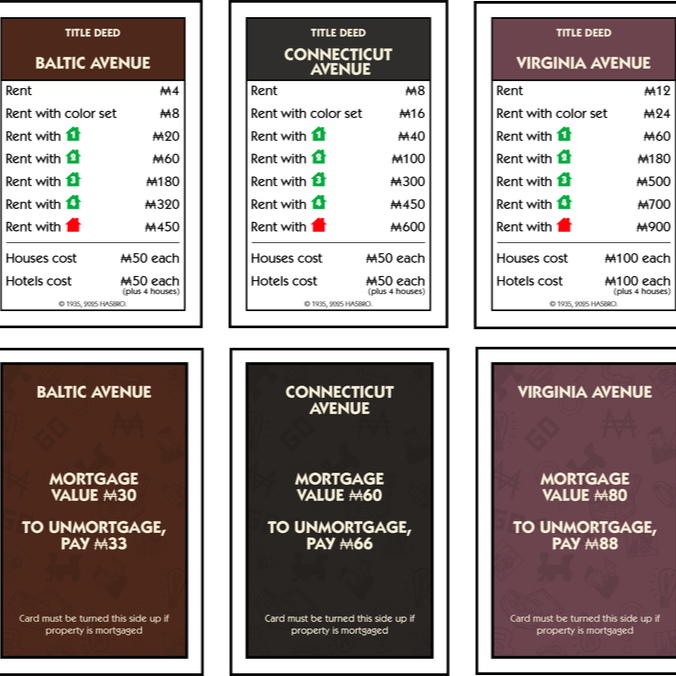
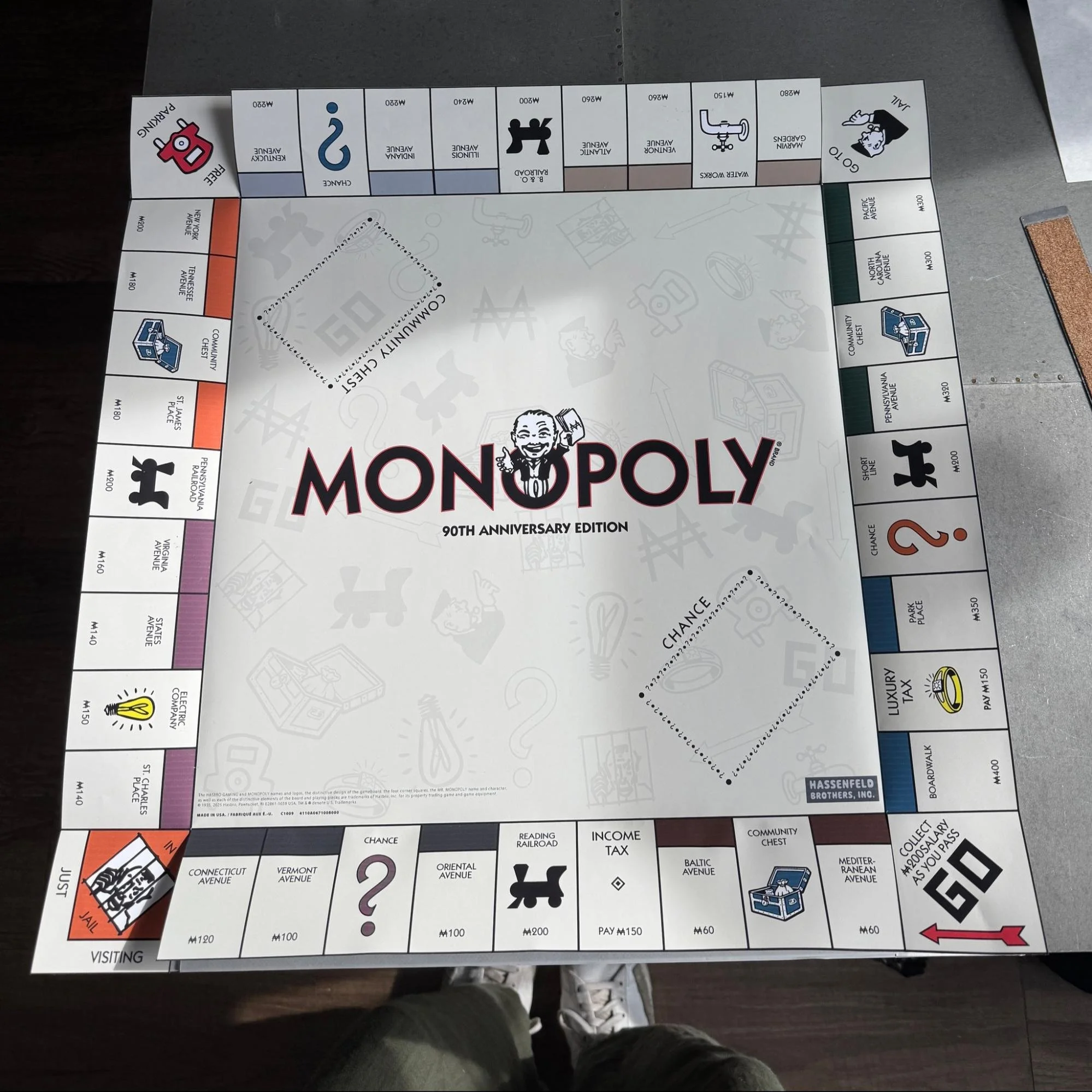
After critiques, prototype testing, and months of iteration, I moved into the final design phase. I leaned fully into the aesthetic direction I had been developing, choosing to embrace my own take on Monopoly rather than simply recreating the original. During this stage, I finalized the card layouts, refined the typography and color choices, and created a repeating pattern using classic Monopoly icons to unify the system. With the visuals complete, the next step was building the physical piece and bringing the concept to life.
Final Build
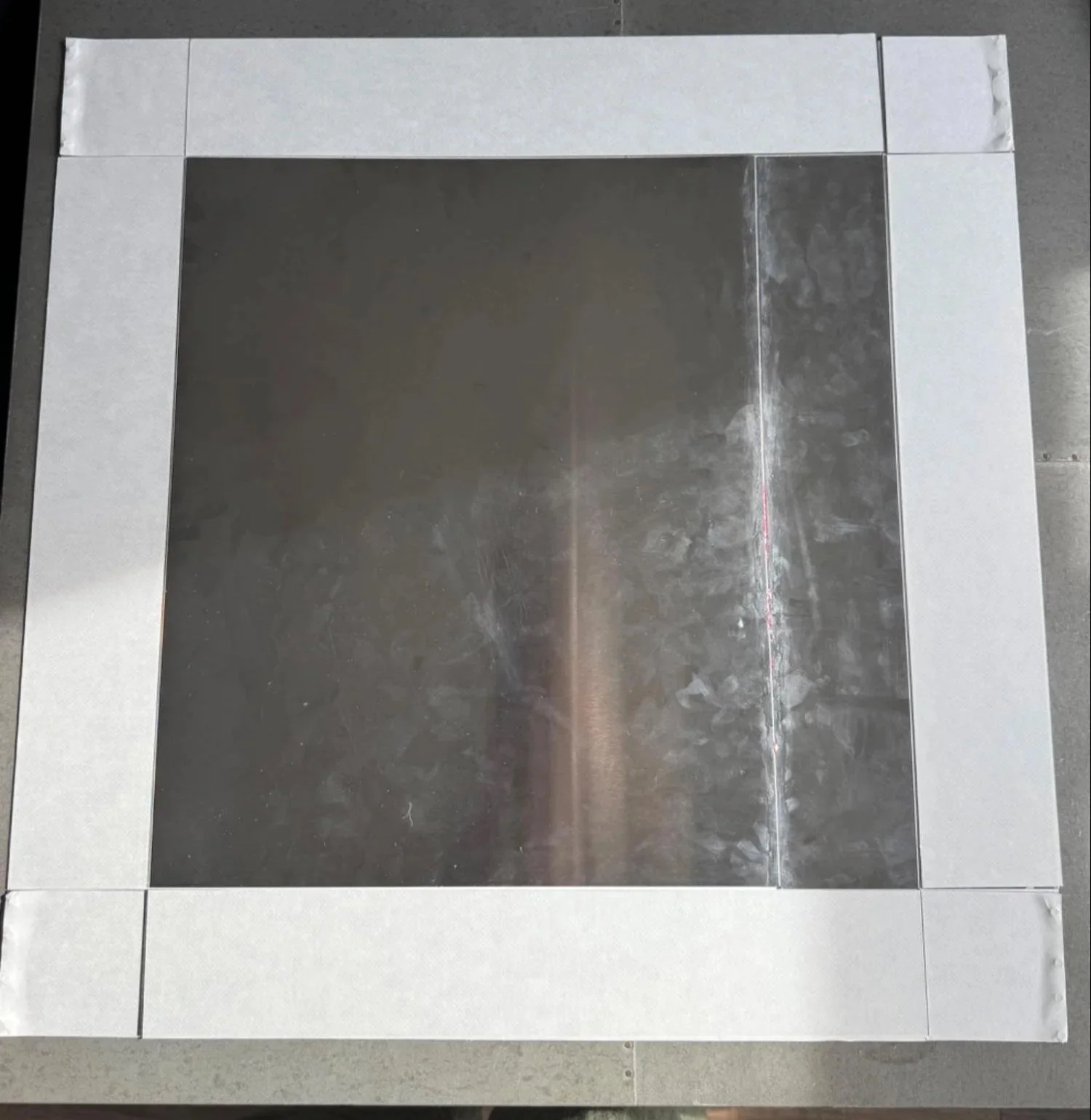
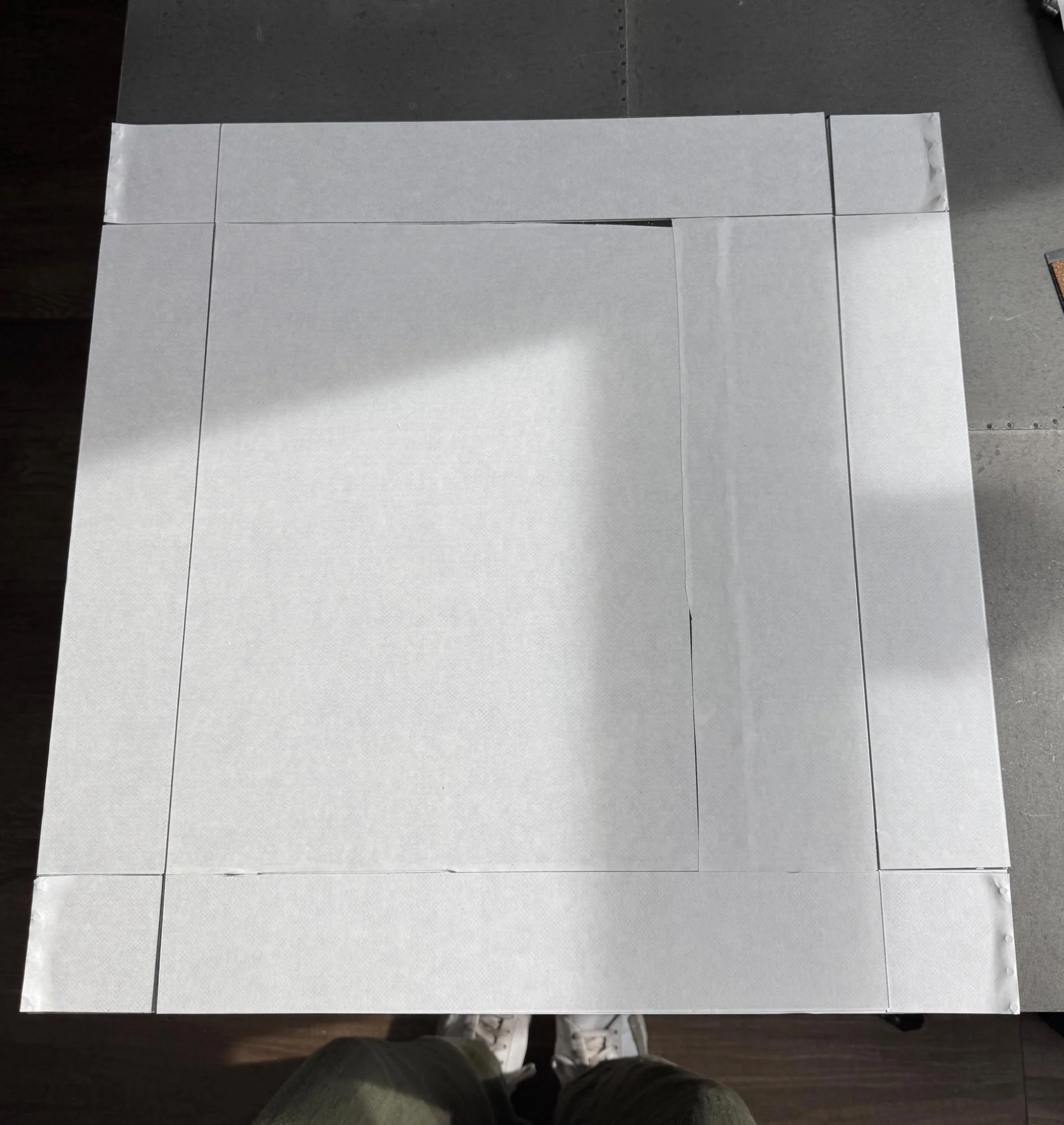
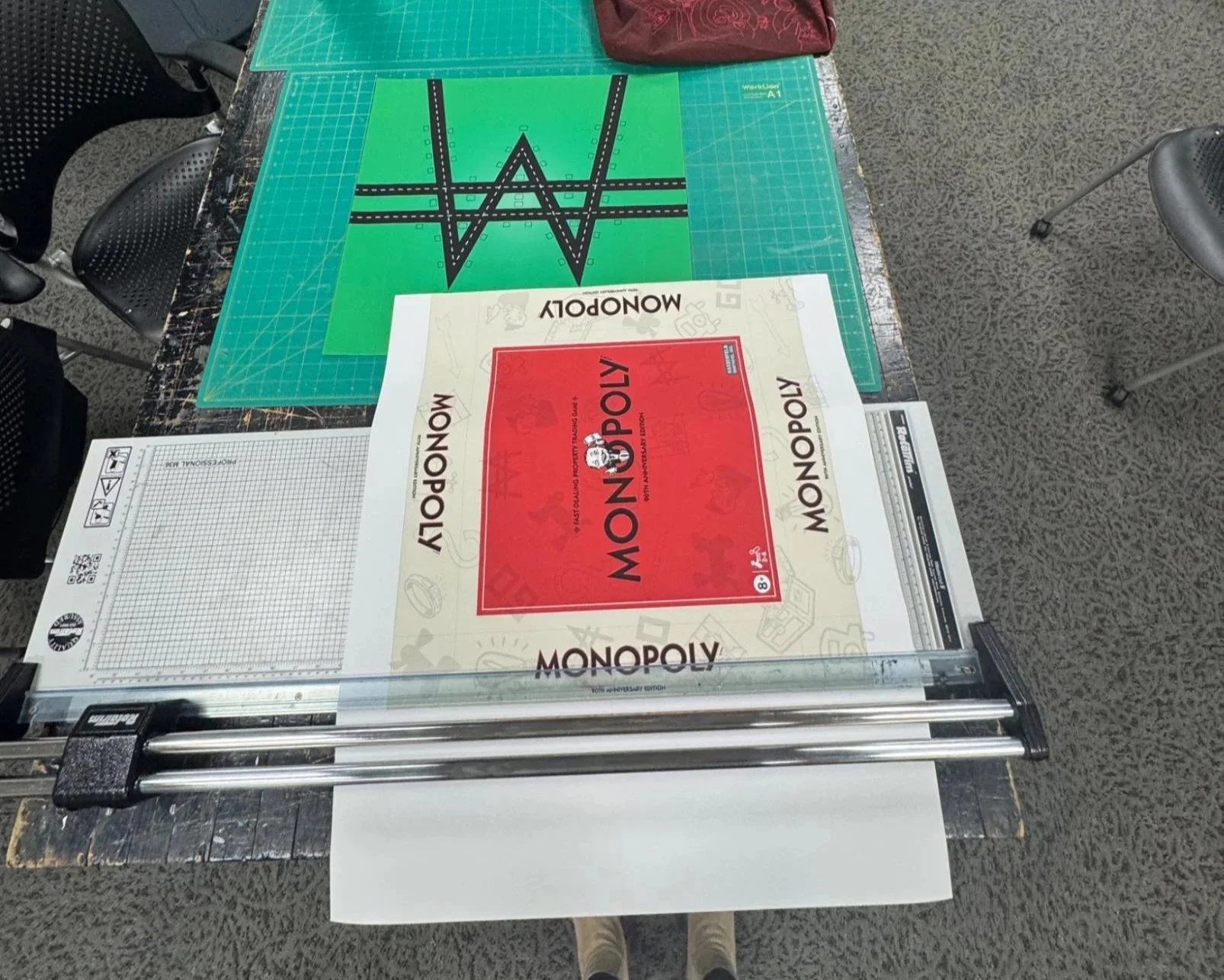
For the final prototype, I shifted my focus to building a version that felt polished and fully resolved. I used artist-tac to apply the printed graphics, which helped the paper go down smoothly and avoided the bubbling I experienced in earlier tests. The stainless steel sheets needed to be cut and measured with diligence so the board could fold into itself naturally and function the way I intended. Beneath the surface, I arranged magnets to create a secure, magnetic playing experience. Bringing all of these elements together marked the moment the project finally came to life, and it became a piece I’m genuinely proud of.
Final Prototype
This video captures the final outcome of my project, showing how the board opens, folds, and functions as a fully self-contained system. After months of research, sketching, testing materials, building prototypes, and refining the design, this version represents the complete realization of my concept. It brings together nostalgic visual elements, a redesigned organizational system, and a magnetic structure that solves common frustrations with the original game. Below are additional photos highlighting the details, craftsmanship, and final build of the piece.